
The Mental Health Crisis in Youth Sports: and How We're Addressing It
We need to talk about something that's been weighing heavy on my mind lately. As CEO of Boardwalk Beasts Football Club, I've watched this sport change young lives for the better: but I've also seen the dark side that nobody wants to discuss. The mental health crisis in youth sports isn't just some abstract statistic. It's real kids, real families, and real pain happening right here in our community.
Last month, I sat across from a parent whose 13-year-old son was having panic attacks before games. Three weeks ago, one of our most talented players told me he was thinking about quitting because he "wasn't good enough anymore." These conversations happen more often than they should, and they're happening everywhere: not just at our club.
The numbers are staggering. Research shows that 32% of elite young athletes report depression, 26% report anxiety, and here's the kicker: 70% of kids drop out of organized sports by age 13. That's not just a loss for sports; it's a loss for these kids' physical and mental wellbeing.
The Perfect Storm: What's Driving This Crisis
Youth sports today look nothing like what most of us experienced growing up. The pressure has intensified from every angle, creating a perfect storm for mental health struggles.
Performance Pressure Has Gone Nuclear
Social media amplifies everything. One bad game gets posted, shared, and commented on by dozens of people. Kids see college recruiters' social media posts about "elite" athletes when they're barely in middle school. They start believing that every play, every game, every season determines their entire future.
I've seen 11-year-olds stressed about their "recruiting tape." Eleven. Years. Old. That's not normal, and it's not healthy.
The Specialization Trap
Parents get sold on this idea that their kid needs to play one sport year-round to "make it." But research shows that early specialization actually increases injury rates and burnout. When football becomes your entire identity at 10 years old, what happens when you have a bad game? When you get injured? When you realize you might not get that college scholarship?
Coaching That Tears Down Instead of Building Up
Not all coaches are trained to handle the mental and emotional development of young athletes. Some still use outdated methods: yelling, humiliation, or making playing time contingent on perfection. When 8% of youth who quit sports cite coach abuse as the reason, we have a serious problem in our coaching culture.
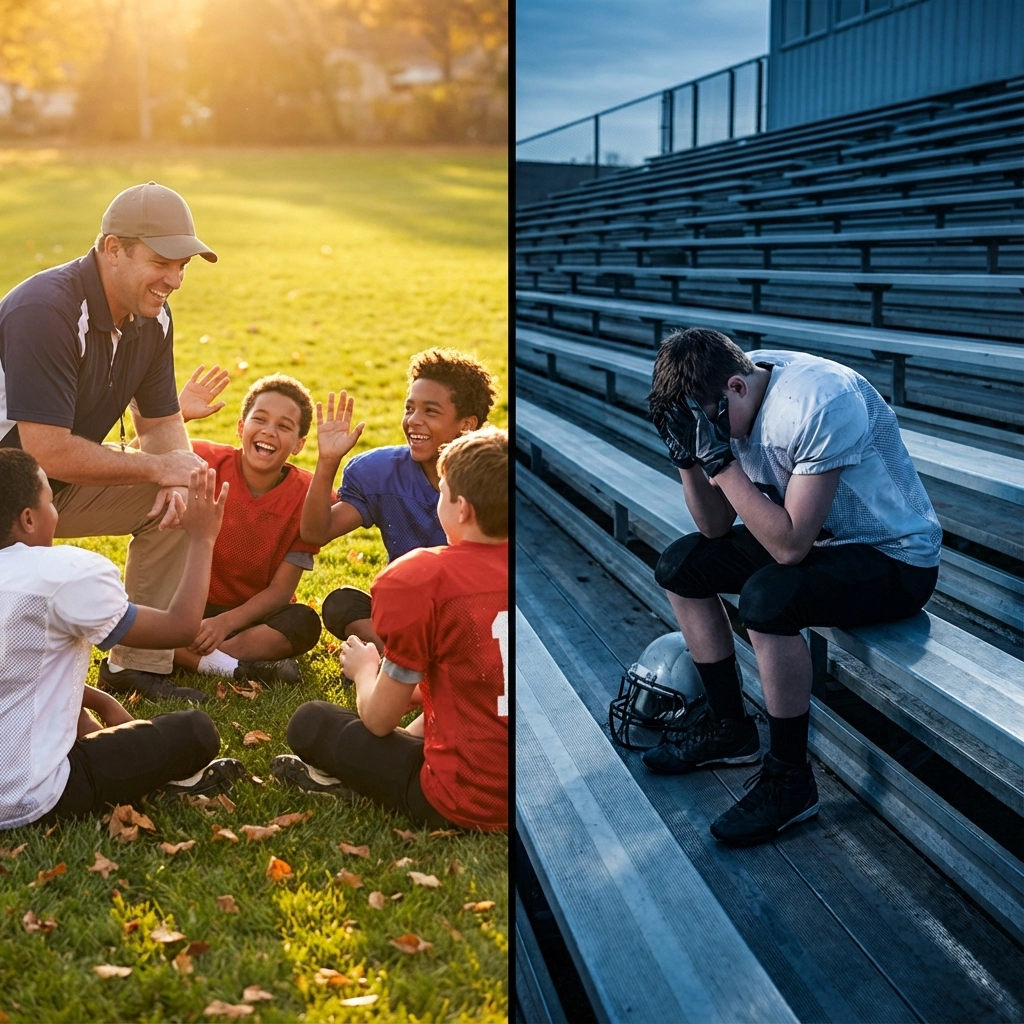
How Boardwalk Beasts is Fighting Back
We refuse to contribute to this crisis. Instead, we're actively working to be part of the solution. Here's what we're doing differently:
Our "Whole Athlete" Philosophy
Every player who joins Boardwalk Beasts gets more than football training. We focus on developing complete human beings. Our coaches receive training on recognizing signs of anxiety, depression, and burnout. We teach them to ask the right questions: "How are you feeling?" not just "Did you watch the film?"
During our recruiting programs, we emphasize character development alongside athletic skills. College scouts want players who can handle adversity, work in teams, and maintain perspective: not just athletic robots.
Redefining Success
Win-loss records don't define our players' worth. We celebrate effort, improvement, leadership, and sportsmanship just as loudly as we celebrate touchdowns. Our reward program recognizes players for things like helping teammates, showing perseverance through challenges, and demonstrating good character on and off the field.
Last season, we gave out more awards for "Most Improved Attitude" than for "Most Touchdowns." That's intentional.
Mental Wellness Check-ins
Our coaches conduct regular one-on-one check-ins with players: not about football, but about life. How's school? How are things at home? Are you having fun? Are you feeling overwhelmed?
We've trained our staff to recognize warning signs: changes in energy, isolation from teammates, perfectionist tendencies that turn unhealthy, or sudden drops in performance that might indicate mental health struggles.
Creating Safe Spaces
Our locker room culture emphasizes support over competition between teammates. We have a zero-tolerance policy for bullying, hazing, or any behavior that makes players feel unsafe or unwelcome.
We also provide resources for parents. Many don't realize their well-intentioned encouragement might be adding pressure. We help families understand the difference between supportive motivation and harmful pressure.

Multi-Sport Encouragement
Despite being a football club, we actively encourage our players to participate in other sports during off-seasons. Research shows that athletes who play multiple sports have lower injury rates, better overall athleticism, and reduced burnout.
We've partnered with local baseball, basketball, and track programs to make sure our players have opportunities to develop different skills and find joy in various activities.
What Parents and Athletes Can Do Starting Today
The responsibility doesn't rest solely on coaches and clubs. Parents and athletes need tools to protect mental health too.
For Parents:
Check Your Language
Instead of "Did you win?" try "Did you have fun?" Instead of "You should have caught that pass," try "I love watching you play." Your words carry enormous weight.
Focus on Effort Over Outcome
Praise the process: hard work, good decisions, helping teammates: not just results. Kids can't always control whether they win or score, but they can control their effort and attitude.
Model Healthy Perspective
Your child is watching how you react to their sports experiences. If you're stressed about their performance, they'll feel that stress too. Show them that sports are important but not everything.
Stay Connected to Their Experience
Ask about their teammates, their coach's feedback, and how they feel about playing. If your child expresses anxiety or says they're not having fun, listen without immediately trying to fix it.
For Young Athletes:
Remember Your "Why"
Write down why you started playing football. Was it fun? Did you love being part of a team? Revisit that original motivation when pressure mounts.
Develop Identity Beyond Sports
You are more than an athlete. Invest time in friendships, hobbies, academics, and family relationships that have nothing to do with football.
Learn Stress Management Techniques
Practice deep breathing, visualization, or mindfulness. These skills help on the field and in life.
Speak Up When You Need Help
There's no shame in struggling. Talk to coaches, parents, school counselors, or trusted adults when you're feeling overwhelmed.
Building Mental Health Resources
We're not mental health professionals, but we can connect families with resources. We've compiled a list of local counselors who specialize in sports psychology and understand the unique pressures young athletes face.
We also recommend apps like Headspace or Calm for daily mindfulness practice, and we're exploring partnerships with mental health organizations to provide workshops for players and parents.
Our skill development programs now include sessions on goal-setting, handling pressure, and building resilience: skills that serve players long after their football careers end.
The Road Ahead
The mental health crisis in youth sports won't be solved overnight, but it starts with acknowledging the problem and committing to change. Every coach who chooses encouragement over criticism, every parent who prioritizes their child's wellbeing over their performance, and every club that values character development alongside athletic achievement moves us in the right direction.
At Boardwalk Beasts, we're committed to being part of the solution. We want our players to love football, develop life skills, and maintain perspective on what really matters. We want families to feel supported, not stressed, by their sports experience.
If you're concerned about your child's mental health and sports experience, reach out to us at boardwalkbeastsfb.com. Let's work together to make youth sports what they should be: fun, developmental, and mentally healthy for everyone involved.
Because at the end of the day, we're not just building better football players. We're building better human beings.
About Author
