
The Evolution of Mike Leach's Air Raid Offense: From Revolutionary to Modern Masterpiece
The Air Raid offense didn't just change college football: it revolutionized how we think about the game itself. What started as an experimental approach by a couple of unconventional coaches has become the foundation for modern offensive football at every level, from the NFL down to youth programs like ours here at Boardwalk Beasts.
The Revolutionary Beginnings
The Air Raid story begins with Hal Mumme, a coach willing to challenge everything traditional football held sacred. Working at Iowa Wesleyan in the early 1990s, Mumme had what he called "epiphanies" that would reshape offensive football forever. Instead of establishing the run to set up the pass, why not just throw the ball consistently and effectively?
When Mumme needed an offensive line coach who could think outside the box, he made a decision that would change football history: he hired Mike Leach, a lawyer with unconventional ideas about the game. Together, they built something that defenses had never seen before.
The name "Air Raid" actually came from Valdosta State, where the school sounded an air horn after every touchdown. It was a perfect fit for an offense that would soon be lighting up scoreboards across the country.
Core Revolutionary Concepts
The Air Raid was built on three pillars that broke every traditional football rule:
Commitment to Passing: While most teams ran 60-70% of the time, Air Raid teams flipped that ratio completely. At Washington State, Leach's teams threw 663 times compared to just 295 rushes: a 69-31 split that was unheard of at the time.
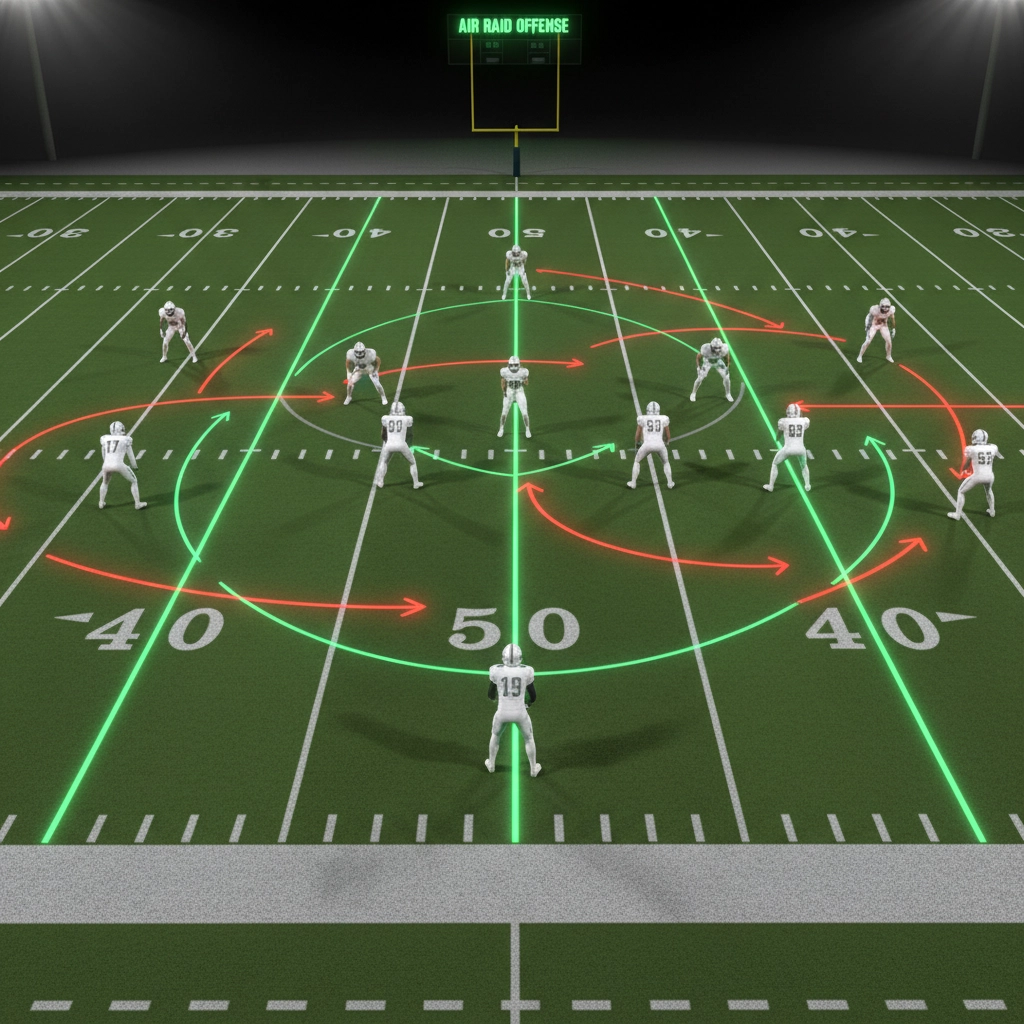
Wide Offensive Line Splits: Forget the traditional tight formation. Air Raid linemen spread out 2-3 feet apart in two-point stances. This simple change completely disrupted how defenses could rush the quarterback and defend the middle of the field.
Simplicity Through Repetition: Instead of thick playbooks with hundreds of plays, Mumme and Leach built their system around just seven or eight core concepts. Their philosophy was simple: "What we do, we're going to do it perfectly."
The Tempo Revolution
The no-huddle attack became the Air Raid's secret weapon. After studying successful two-minute drills, Mumme and Leach realized they could extend that pace for entire games. This constant tempo exhausted defenses mentally and physically while giving the offense more snaps: and more opportunities to score.
The logic was brilliant in its simplicity. If a receiver had single coverage, that was an opportunity. If a linebacker was out of position, the offense exploited it immediately. By forcing defenses to cover the entire field, they became vulnerable everywhere.
Leach's Texas Tech Laboratory
Mike Leach's decade at Texas Tech (2000-2009) proved the Air Raid wasn't just a gimmick: it was a championship-caliber system. The Red Raiders averaged eight wins per season and made bowl games every single year under Leach.
The numbers were staggering. In 2005, quarterback Cody Hodges threw for over 4,000 yards while the team averaged nearly 40 points per game. But the defining moment came in 2008 when Texas Tech's Air Raid upset #1 ranked Texas 39-33, proving that this "basketball on grass" approach could beat anyone.
What made it special wasn't just the statistics: it was how the Air Raid leveled the playing field. Teams with less recruiting talent could compete with powerhouse programs by being smarter and faster, not just bigger and stronger.
Modern Evolution and Adaptation
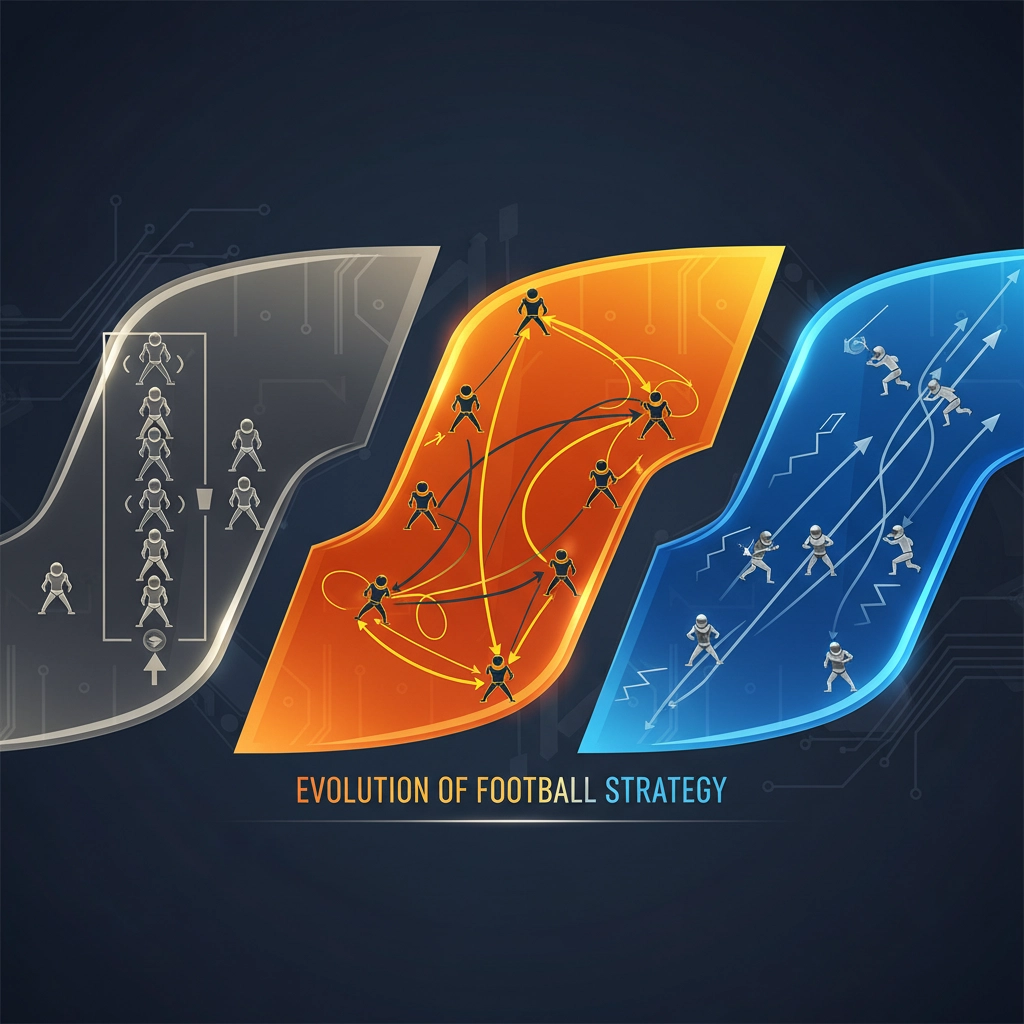
Today's Air Raid looks different than Leach's original version, but the core principles remain the same. Modern coaches have added RPO (Run-Pass Options) concepts, creating even more stress on defenses. The tempo has gotten faster, and route combinations have become more sophisticated.
The offense has spread everywhere:
College Football: Teams like Oklahoma, Ole Miss, and Arizona have built their identities around Air Raid concepts
High School: Programs across the country use simplified versions to maximize their talent
NFL: Coaches like Sean McVay and Kyle Shanahan incorporate Air Raid spacing and concepts
Youth Football: Organizations like Boardwalk Beasts teach these fundamentals to develop better quarterbacks and receivers
Key Elements That Made It Work
Spacing: The Air Raid created natural spacing that gave receivers room to work and quarterbacks clear reads. Every route had a purpose and a specific spot on the field.
Quick Game: Most passes happened within 2.5 seconds, making offensive line protection easier and keeping quarterbacks healthy.
Multiple Formations, Same Plays: The same route concepts could be run from different formations, creating confusion for defenses while keeping things simple for the offense.
Receiver Freedom: Route adjustments based on leverage and coverage taught receivers to think like quarterbacks, making the entire passing attack more efficient.
Modern Innovations and Adaptations
Today's Air Raid has evolved beyond what Mumme and Leach originally envisioned:
RPO Integration: Modern offenses combine Air Raid passing concepts with run-pass options, giving quarterbacks even more ways to stress defenses.
Faster Tempo: While the original Air Raid was fast, today's versions operate at breakneck speed, with some teams snapping the ball every 15 seconds.
Mobile Quarterbacks: The system now accommodates athletic quarterbacks who can extend plays and create with their legs while maintaining the core passing principles.
Advanced Route Concepts: Modern Air Raid offenses use more sophisticated route combinations and leverage-based adjustments that require higher football IQ from receivers.
Impact on Youth Football
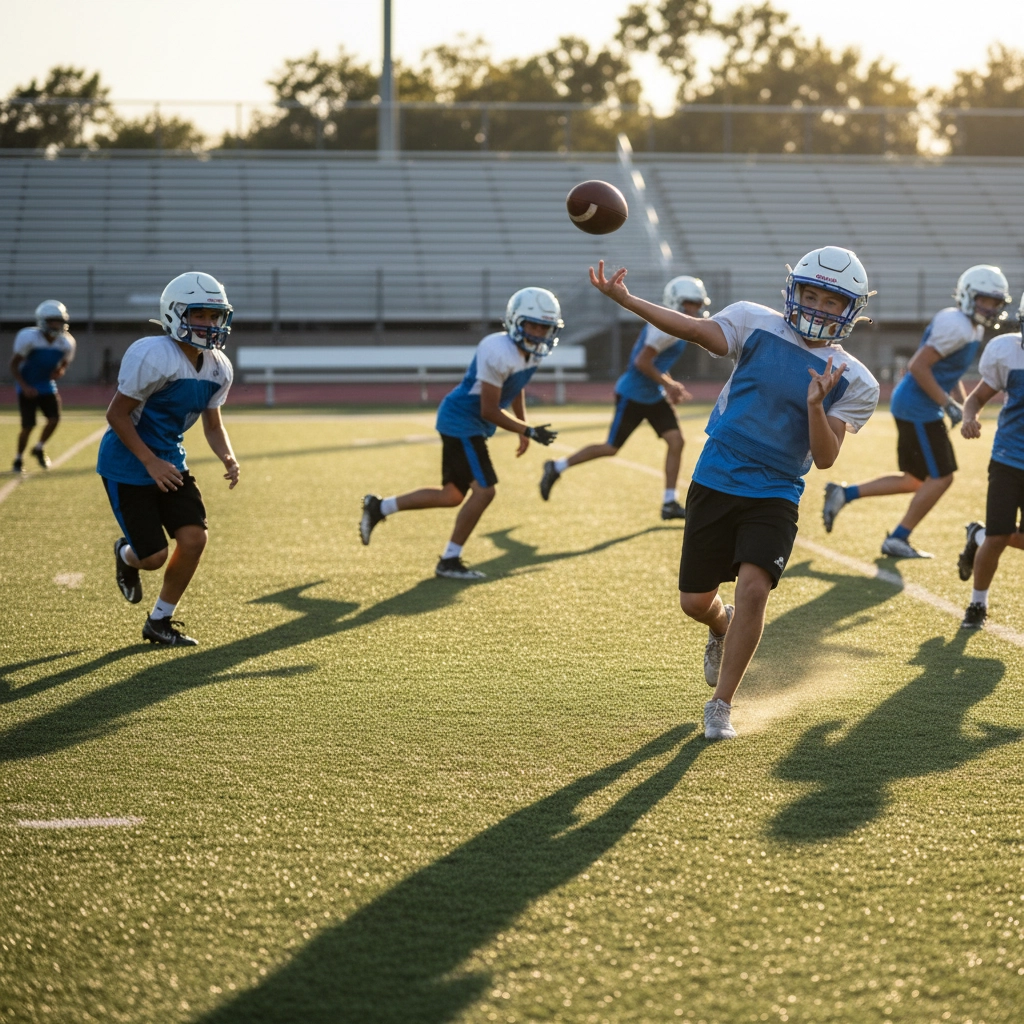
The Air Raid's influence on youth football has been transformative. Young quarterbacks learn to read defenses quickly and make fast decisions. Receivers develop better route-running skills and football intelligence. The system teaches fundamentals that translate to any offensive scheme.
At Boardwalk Beasts, we incorporate Air Raid principles into our QB/WR Elite Series training. Our young athletes learn:
- Quick decision-making under pressure
- Proper route spacing and timing
- Reading defensive leverage and adjustments
- Communication between quarterbacks and receivers
- The importance of tempo in offensive execution
Why It Continues to Work
The Air Raid endures because it's built on timeless principles: space, timing, and intelligence. While defenses have evolved to counter it, the fundamental concepts remain sound. When you can throw the ball efficiently to any level of the field, you force defenses to make impossible choices.
Modern coordinators continue finding new ways to stress defenses using Air Raid concepts. Whether it's adding RPOs, incorporating motion, or using different personnel groupings, the core idea remains: create space, execute precisely, and attack defensive weaknesses systematically.
The Legacy and Future
Mike Leach's passing in 2022 marked the end of an era, but his influence lives on in every offense that prioritizes spacing, tempo, and precision over power and complexity. The Air Raid proved that innovation could overcome tradition, that intelligence could beat raw talent, and that the right system could transform any program.
For youth coaches and players today, the Air Raid offers valuable lessons: football is about making smart decisions quickly, every player on the field matters, and success comes from executing simple concepts perfectly rather than trying to be too clever.
The revolution that started with Hal Mumme and Mike Leach continues to evolve, but its impact on football: from the NFL to youth leagues: is permanent. The Air Raid didn't just change how we play offense; it changed how we think about football itself.
At Boardwalk Beasts, we're proud to carry on this tradition of innovation, teaching young athletes the principles that have shaped modern football while preparing them for whatever the next evolution of the game might bring.
About Author