7v7 Football vs. Traditional Training: Which Builds Better High School Athletes and What Are the Pros and Cons of All of It?
The off-season training debate is heating up in youth football circles. Parents, coaches, and young athletes are asking the same question: Should we focus on 7v7 football or stick with traditional 11v11 training? The answer isn't as black and white as you might think.
Both formats have their place in developing elite high school athletes, but they serve very different purposes. Understanding these differences can make or break your athlete's development trajectory.
What Exactly Is 7v7 Football?
7v7 football strips the game down to its core passing elements. Picture this: seven players per side on a 40-yard field, no tackling, and pure speed. It's all about quarterbacks, receivers, defensive backs, and linebackers going head-to-head in rapid-fire scenarios.
The rules are simple: games typically run two 20-minute halves with plays ending on two-hand touch or flag pulls. No offensive or defensive linemen. No blocking schemes. Just pure skill position battles that happen at lightning speed.
This format has exploded in popularity because it isolates the skills that translate directly to modern football: route running, coverage, decision-making under pressure, and conditioning.
The 7v7 Advantage: Where It Shines
Skill Development on Steroids
In 7v7, skill position players get 3-4 times more touches than traditional football. Quarterbacks face constant pressure to make quick decisions. Receivers run crisp routes every single play. Defensive backs can't rely on a pass rush: they're exposed on every down.
This creates an intensive laboratory for developing the skills that matter most in today's passing-heavy game.
Lower Injury Risk
The numbers don't lie: 7v7 has significantly lower injury rates, especially concerning head trauma. Without tackling and blocking, athletes can train year-round without the cumulative physical toll of traditional football.
Faster Pace, Better Conditioning
Traditional football has natural breaks: huddles, timeouts, injuries. 7v7 runs at a relentless pace that builds incredible cardiovascular endurance. Players develop the ability to maintain focus and execution when fatigue sets in.
Year-Round Development
Because there's no contact, 7v7 can be played throughout the year. This means consistent skill development rather than the stop-start nature of traditional seasons.
The 7v7 Limitations: What It Can't Do
No Physical Preparation
Here's the brutal truth: 7v7 doesn't prepare players for getting hit. The physicality, toughness, and mental resilience required for traditional football simply can't be developed without contact.
Missing Half the Game
Football is more than passing. Line play, blocking schemes, running game fundamentals, and tackling techniques are completely absent from 7v7. Players who rely too heavily on 7v7 can develop blind spots in their game.
False Confidence
Success in 7v7 doesn't automatically translate to traditional football success. The protected pocket, clean releases, and simplified coverage concepts can create unrealistic expectations about what the full game offers.
Traditional 11v11 Training: The Complete Package
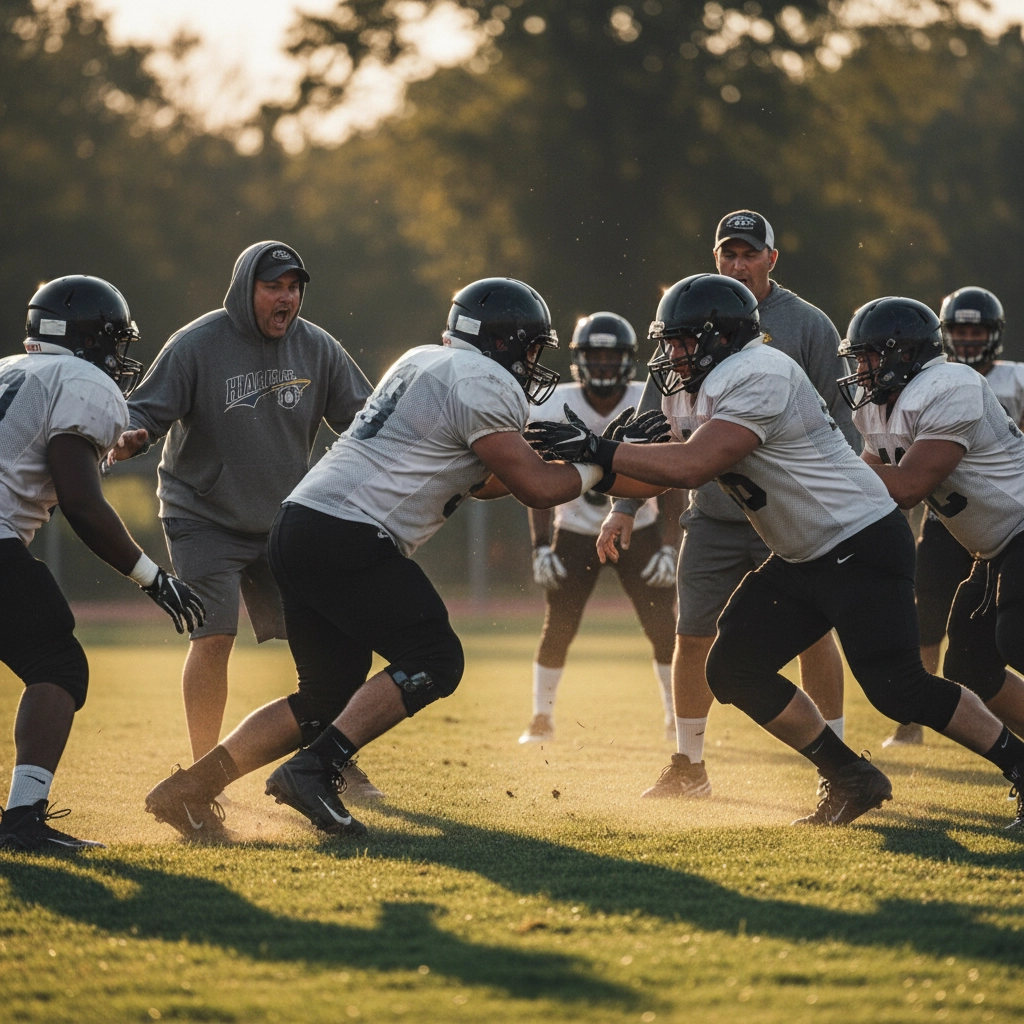
Traditional football training encompasses everything: from the smallest guard pulling to the biggest linebacker delivering a hit. It's comprehensive, demanding, and irreplaceable for certain aspects of development.
Complete Skill Set Development
Only traditional football teaches the full spectrum of skills needed at higher levels. Blocking fundamentals, tackling technique, line calls, and complex defensive schemes require the full 11v11 environment.
Physical and Mental Toughness
Getting hit, fighting through contact, and maintaining focus under physical stress: these qualities can only be developed through traditional training. College scouts specifically look for players who demonstrate toughness under pressure.
Real Game Situations
The complexity of 11v11 football creates authentic decision-making scenarios. Players learn to process information with 22 bodies on the field, not just seven. This translates to better game management and situational awareness.
Team Chemistry
Traditional football builds the camaraderie that comes from shared physical adversity. The bonds formed in full-contact practices often translate to better team unity during games.
Traditional Training Drawbacks
Higher Injury Risk
The elephant in the room: traditional football carries significant injury risks, particularly concerning concussions and long-term brain health. These risks increase with the intensity and frequency of contact.
Limited Skill Position Reps
In a typical practice, quarterbacks might throw 20-30 passes. Receivers might run 15 routes. Compare this to 7v7, where these numbers triple.
Season Limitations
Full-contact training is seasonal by necessity. Bodies need recovery time, which limits year-round development opportunities.
Slower Pace
The stop-and-start nature of traditional football doesn't build the same cardiovascular conditioning as 7v7's relentless pace.
The Verdict: It's Not Either/Or
Here's what we've learned from working with hundreds of young athletes at Boardwalk Beasts: the best approach isn't choosing one over the other: it's strategically combining both.
For Skill Position Players (QB, WR, RB, DB, LB):
Use 7v7 during off-seasons for intensive skill development. The repetition and pace accelerate learning curves dramatically. During the season, traditional football provides the complete preparation needed for games.
For Linemen:
Traditional training remains essential. The techniques, physicality, and team concepts simply can't be replicated in 7v7 format.
For Younger Players (Ages 8-12):
7v7 provides an excellent introduction to football fundamentals with lower risk. Players can develop love for the game before transitioning to full contact.
For College-Bound Athletes:
Both formats are crucial. 7v7 develops the refined skills that catch recruiters' attention. Traditional football proves you can handle the physical demands of college competition.
Making the Right Choice for Your Athlete
Consider these factors when deciding on training focus:
Position and Aspirations: Skill position players benefit most from 7v7 supplementation. Linemen need traditional training emphasis.
Injury History: Athletes with concussion concerns might benefit from 7v7-heavy training programs.
Development Stage: Younger players can build confidence through 7v7 before progressing to traditional football.
Time Commitment: 7v7 typically requires less time investment with shorter games and condensed seasons.
The Boardwalk Beasts Approach
At Boardwalk Beasts, we've seen the power of combining both formats strategically. Our skill development programs incorporate 7v7 principles for rapid skill building while maintaining traditional football fundamentals.
We've watched players transform their games through targeted 7v7 training during off-seasons, then dominate on traditional fields during their high school seasons. The key is understanding when and how to use each format.
The future belongs to athletes who can excel in both environments: players who have the refined skills developed through 7v7 competition and the toughness built through traditional football.
Your athlete's development doesn't have to be limited by an either/or choice. The smartest approach combines the best of both worlds, creating complete players ready for whatever the next level demands.
Ready to see how this hybrid approach can transform your athlete's game? Check out our upcoming training opportunities and discover why Boardwalk Beasts athletes consistently outperform their peers at the next level.
About Author