
7 Plyometric Speed Mistakes You're Making (And How Youth Football Players Fix Them)
Speed kills on the football field. But here's the brutal truth: most youth football players are training for speed completely wrong.
At Boardwalk Beasts Football Club, we see it every day. Kids jumping around doing random "plyo" exercises, coaches piling on more and more reps, and parents wondering why their young athlete isn't getting faster despite all that training.
The problem isn't lack of effort: it's lack of direction. Plyometric speed training for youth athletes requires precision, not just sweat. Make these seven mistakes, and you're actually slowing your player down while setting them up for injury.
But fix them? That's when the magic happens.
Mistake #1: Thinking Every Jump Is a Plyometric
What You're Doing Wrong
If your kid is doing jump squats and calling it plyometrics, you're missing the point entirely. True plyometric training isn't just jumping: it's about transitioning from stretching to contracting in under 0.2 seconds. That's lightning fast.
Most "plyometric" exercises we see are just jumping with extra steps. Regular jump squats? Those are strength exercises in disguise. Your athlete can get the same benefits from squats and deadlifts in the weight room.
The Boardwalk Beasts Fix
Real plyometrics demand maximal speed and force with minimal load. Think pogo jumps, depth jumps, and max-velocity sprints with full recovery between efforts. These exercises target the fastest end of the force-velocity curve and actually enhance the stretch-shortening cycle that makes athletes explosive.
At our training camps, we teach the difference between jumping for strength and jumping for speed. The result? Athletes who don't just jump higher: they explode off the line faster.
Mistake #2: More Reps = More Speed (Spoiler: It Doesn't)
What You're Doing Wrong
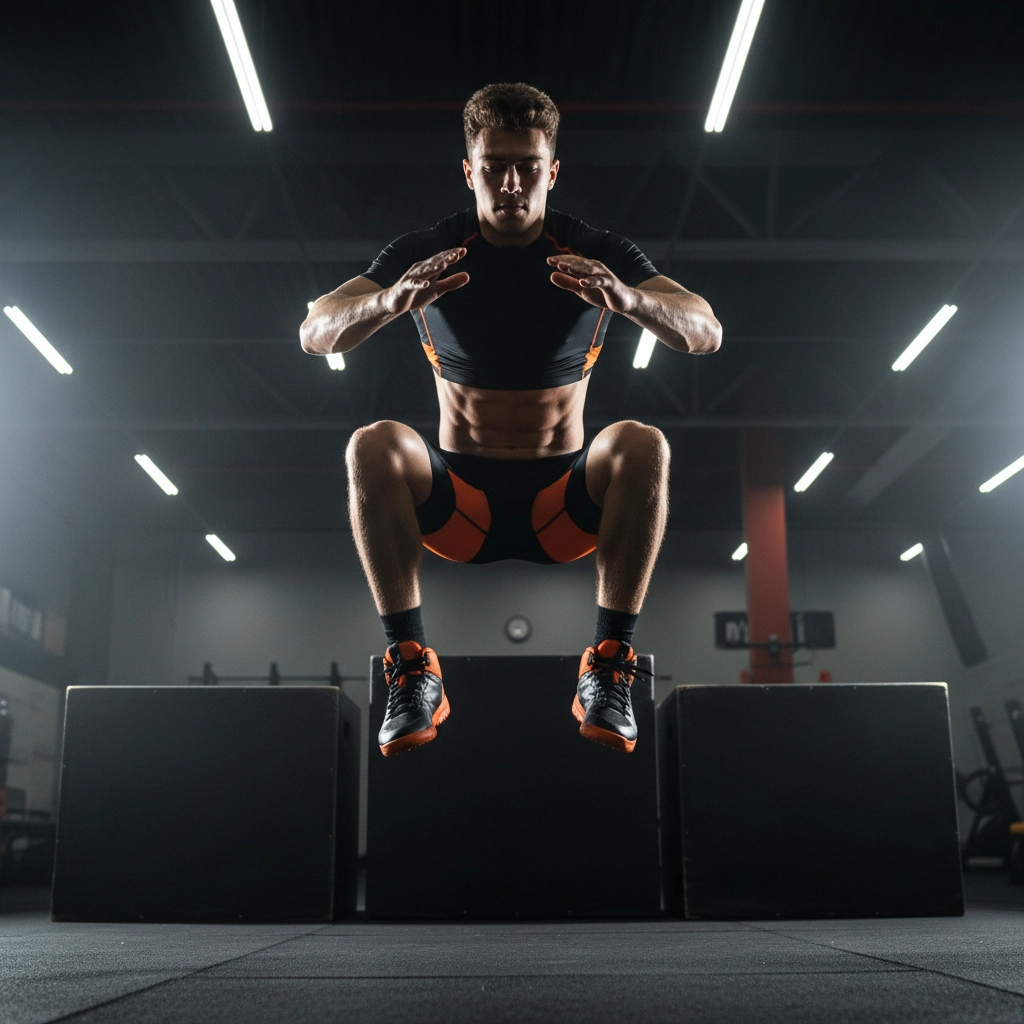
Here's where most coaches go wrong: they think volume creates velocity. "Do 100 jump squats!" "Run those box jumps until you can't anymore!" This creates sloppy movement patterns and tired athletes, not fast ones.
High ground contact numbers without quality movement is just organized exhaustion.
The Boardwalk Beasts Fix
We flip the script: low volume, high quality. Every single rep should look crisp, explosive, and intentional. For youth athletes, quality beats quantity every time.
Our rule? If the technique starts breaking down, the set is over. Period. It's better to do 5 perfect explosive jumps than 50 tired ones. This approach creates neural adaptations that actually translate to game speed.
Mistake #3: Skipping Steps Like You're Already Elite
What You're Doing Wrong
Every parent wants their kid training like they're already college-bound. But jumping straight to advanced plyometrics without mastering the basics is like teaching calculus before addition.
Athletes without proper posture, landing mechanics, and body control aren't ready for complex movements. They're ready for injury.
The Boardwalk Beasts Fix
You earn your way into advanced plyometrics. Start with simple movements: proper posture, landing technique, and learning to create stiffness on impact.
Our progression system ensures every athlete masters the fundamentals before moving up. Can your athlete stick a perfect two-foot landing every time? Can they maintain good posture throughout a simple hop? Master these first, then we'll talk about depth jumps.
Mistake #4: Training When You're Already Gassed
What You're Doing Wrong
Picture this: your athlete just finished heavy squats, ran some "gassers," and now it's time for plyometrics. This is backwards. Plyometric training demands fresh legs and a sharp nervous system, not exhausted muscles trying to survive.
Training explosive power when you're already tired is like trying to sprint in quicksand.
The Boardwalk Beasts Fix
Plyometrics come first, always. After a proper warm-up but before anything that creates significant fatigue. This is when the nervous system is primed for maximum power output.
We structure our sessions so athletes can express true explosiveness, not just go through the motions. Fresh legs create fast athletes. Tired legs create bad habits.

Mistake #5: Straight Lines Only (Football Isn't Track)
What You're Doing Wrong
If your plyometric training only happens in straight lines, you're preparing your athlete for track, not football. Football demands deceleration, cutting, and changing direction: often all in the same play.
Also, too much intensive work destroys quality. Research shows even elite athletes can only maintain quality for 200-250 yards of legitimate speed work per session.
The Boardwalk Beasts Fix
Train in all directions. Our athletes develop explosive power forward, backward, laterally, and rotationally. We create a broad base of quality ground contacts that translate to real game situations.
Volume control is crucial too. We balance intensive efforts with recovery and preparation work. Quality over quantity, in all planes of motion.
Mistake #6: Turning Plyometrics Into Equipment Festivals
What You're Doing Wrong
Boxes, hurdles, cones, bands: if it looks cool on social media, it must work, right? Wrong. Well-executed plyometric training needs two things: speed and force delivered into the ground. Everything else is just distraction.
Multiple props often limit movement patterns rather than enhance them.
The Boardwalk Beasts Fix
Keep it simple. The best plyometric tool? Your athlete's body and serious intent. Simple bodyweight movements often create better results because they allow maximum force expression without artificial limitations.
We save equipment for specific skills or variation, not as the foundation of explosive development. Sometimes the old-school approach is still the best approach.
Mistake #7: Forgetting the Ultimate Plyometric Exercise
What You're Doing Wrong
Here's the big secret that isn't really a secret: maximal sprinting at top velocity is the most potent plyometric exercise available. Yet most coaches spend more time on complex jumping patterns than they do on actual sprinting.
The forces created during max-velocity sprinting can't be replicated by any depth jump or fancy drill.
The Boardwalk Beasts Fix
Sprint work is plyometric work. While strength training and jumping drills help with initial acceleration, nothing replicates the demands of sprinting like sprinting itself.
We integrate max-velocity sprint work throughout our programs with proper recovery and intent. Want to get faster? Train fast, with purpose.
The Boardwalk Beasts Difference
Speed isn't just about running drills: it's about understanding how young athletes develop power, explosiveness, and game-changing acceleration. These seven fixes aren't just theory; they're the foundation of how we've helped countless youth football players break through speed plateaus and dominate on the field.
At Boardwalk Beasts Football Club, we don't just train harder: we train smarter. Every plyometric exercise, every sprint drill, and every training session is designed with one goal: making your athlete faster, stronger, and more explosive while keeping them healthy.
Ready to stop making these mistakes and start building real speed? Your athlete's breakout performance starts with doing plyometrics the right way.
About Author