RPO Defense Explained in Under 3 Minutes: The Simple Strategy Championship Teams Use
Run-Pass Options (RPOs) have become the nightmare that keeps defensive coordinators awake at night. Every Friday night, your defense faces quarterbacks who can read one defender and make the "right" decision in a split second. But here's the thing: championship teams have cracked the code, and it's simpler than you think.
At Boardwalk Beasts, we've seen too many talented youth and high school athletes get torched by RPO concepts because their coaches overcomplicate the solution. The truth? Elite defenses don't need 47 different coverages to stop RPOs. They need the right mindset, the right personnel, and one fundamental principle that works every time.
Why RPOs Are Destroying Your Defense
Before we dive into the solution, let's understand the problem. RPOs work because they put your defenders in impossible situations. The offensive coordinator designs these plays to create a "conflict defender": usually a linebacker or safety who has to choose between stopping the run or covering the pass.
When your middle linebacker sees the running back getting the handoff, his instinct is to fill the gap. But if he commits to the run, the quarterback pulls the ball and hits the slant route right where the linebacker vacated. It's a lose-lose situation, and offensive coordinators know it.
The quarterback isn't making a heroic read: he's simply doing the opposite of what the conflict defender chooses. If the defender plays run, throw the pass. If the defender plays pass, hand off the ball. It's systematic, and it's why RPOs have taken over modern football at every level.
The Championship Solution: Man-to-Man Coverage
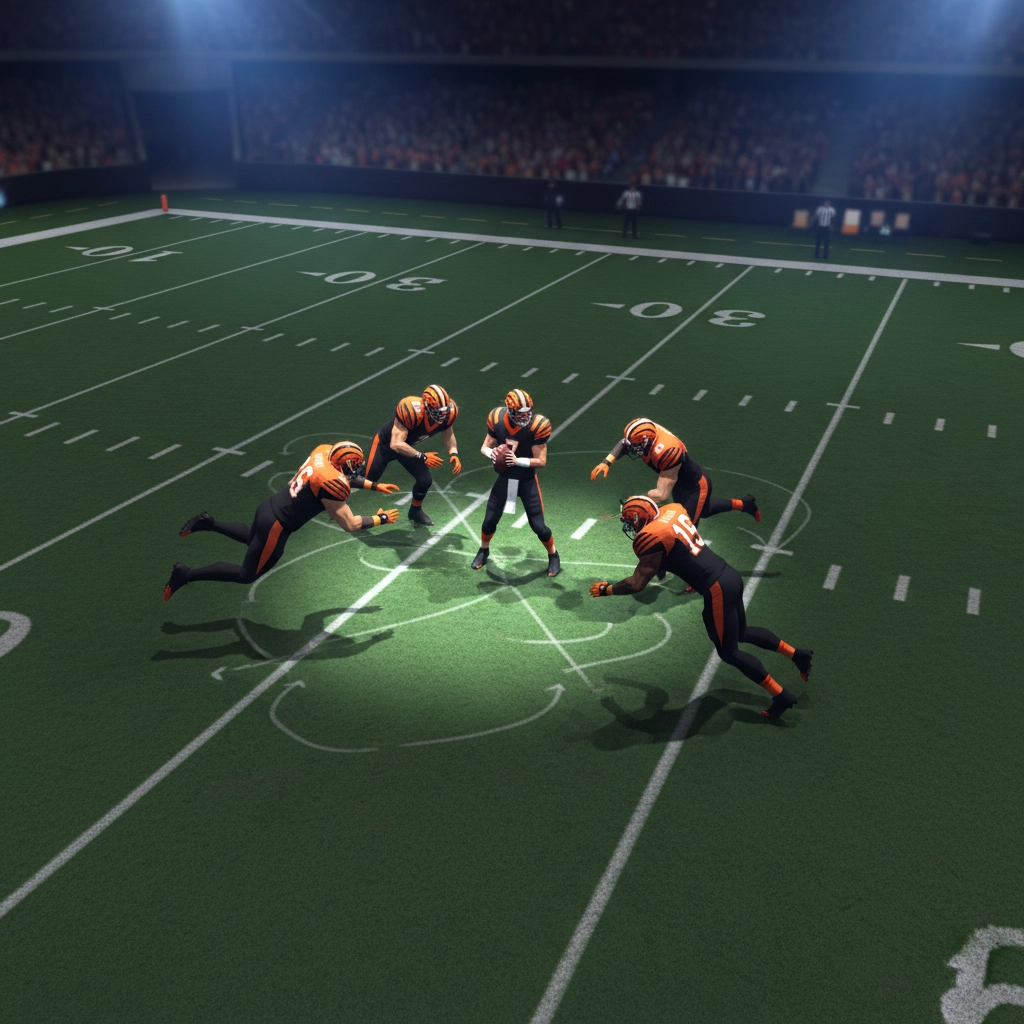
Here's where championship teams separate themselves from the pack: they eliminate the conflict entirely with man-to-man coverage.
When every defender has a specific man to cover instead of a gap responsibility that doubles as pass coverage, the RPO concept falls apart. Your linebacker doesn't have to choose between run and pass: he's covering #21 wherever #21 goes. Your safety doesn't have to worry about the deep third while also playing run support: he's locked onto the tight end.
Man-to-man coverage forces the offense to beat you with execution, not scheme. And that's where having "better cats" becomes your secret weapon.
Why "Better Cats" Make All the Difference
At Boardwalk Beasts, we talk about having "better cats" all the time. It's not just about recruiting: it's about developing athletes who can win their individual battles consistently.
In man-free coverage, you need cornerbacks who can stay in phase with receivers without help. You need linebackers who can cover running backs out of the backfield while still maintaining run fits. You need safeties who can handle tight ends and slot receivers in single coverage.
When you have athletes who can handle these responsibilities, you can play aggressive, attacking defense that takes away the RPO's core advantage. The quarterback can't just "read" a defender anymore: he has to make perfect throws into tight coverage or hand the ball off into a loaded box.
This is why strength and conditioning, technique work, and competitive mindset matter so much in youth football. You're not just building football players: you're building "cats" who can dominate their individual assignments.
Split Safety Concepts: The Mint 4 Mod Advantage
But what happens when you don't have elite corners who can consistently win in single coverage? This is where smart defensive coordinators turn to split safety concepts like the "Mint 4 Mod" coverage.
Mint 4 Mod gives you the best of both worlds. You get man coverage principles that eliminate RPO conflicts, but with strategic help that accounts for talent mismatches. Your corners get bracket help on the outside receivers, while your linebackers can play more aggressively against inside routes knowing they have safety help over the top.
The beauty of split safety looks is that they're adaptable. If your left corner is getting beat consistently, you can shift your coverage to give him more help without completely changing your defensive philosophy. If their slot receiver is their best player, you can put your best cover guy on him while rolling safety help away from your strength.
For youth and high school teams, this flexibility is crucial. Your roster changes from year to year, and you need defensive concepts that can adapt to your personnel rather than requiring perfect athletes at every position.
Breaking Down the Coverage Responsibilities
Let's get specific about how these coverages work in practice:
In Man-Free Coverage:
- Cornerbacks: Press coverage on outside receivers, no help expected
- Linebackers: Man coverage on running backs and tight ends
- Free safety: Deep middle, help on any receiver that threatens the end zone
- Strong safety: Run support and underneath coverage on crossing routes
In Mint 4 Mod:
- Cornerbacks: Man coverage with potential bracket help from safeties
- Linebackers: Aggressive run fits with man coverage on receivers in their zone
- Split safeties: One plays deep help, one plays run support and underneath coverage
- Rotation: Coverage can shift based on offensive formation and down/distance
The key is communication and pre-snap recognition. Your players need to understand not just their assignment, but how their assignment fits into the overall coverage concept.

Practical Implementation for Youth Coaches
Here's how to implement these concepts with your team:
Start with the fundamentals. Before you install any coverage, make sure your players understand basic man coverage techniques. Teach your corners how to press, your linebackers how to pattern match, and your safeties how to read route combinations.
Practice the "RPO drill." Set up a simple RPO concept in practice: maybe a inside zone read with a bubble screen or slant route. Let your defense practice their coverage responsibilities while the offense runs the play at half speed. This builds confidence and muscle memory.
Emphasize eye discipline. RPOs work because defenders get distracted by misdirection and play action. Teach your players to trust their keys and stick to their assignments even when the offense is selling something else.
Build communication systems. Your players need simple, clear communication to handle coverage adjustments and formation changes. Develop calls that everyone understands and practice them until they're automatic.
The Boardwalk Beasts Mindset: Aggressive and Attacking
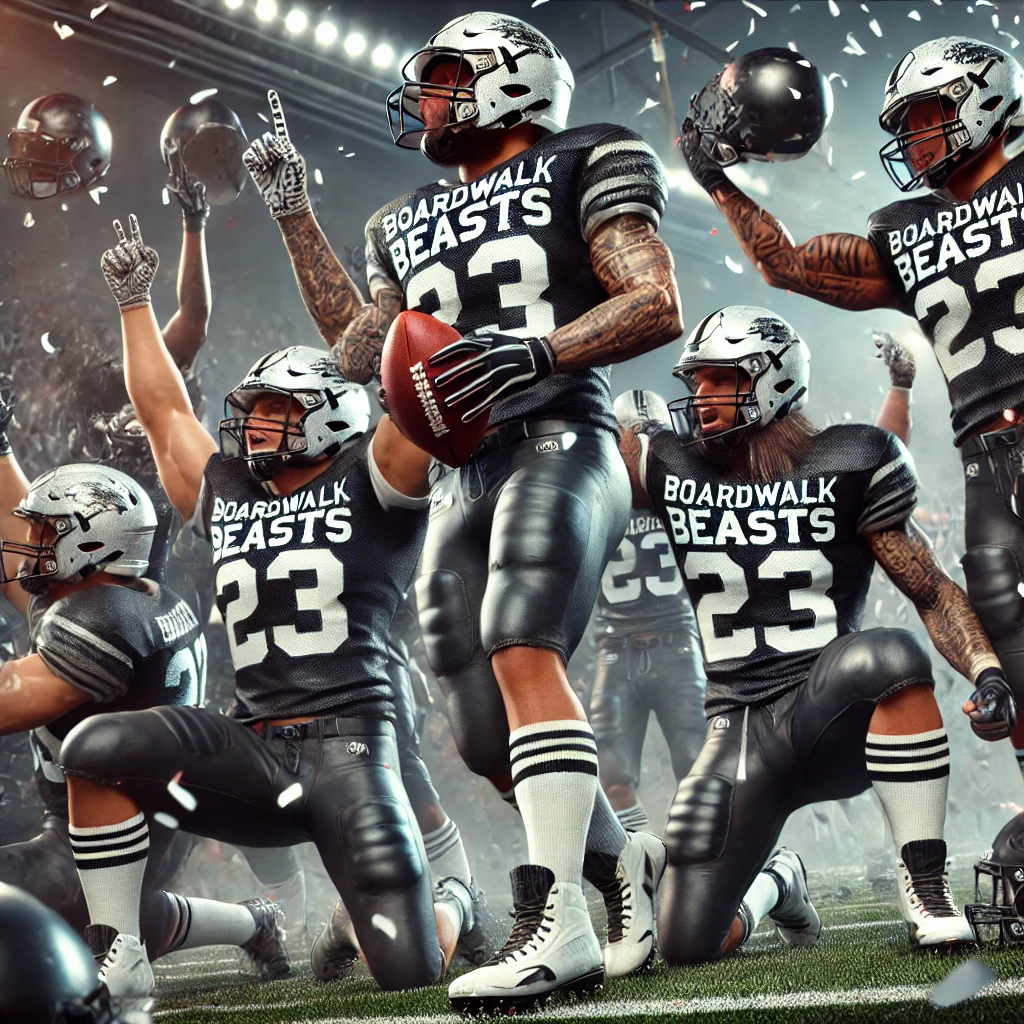
At Boardwalk Beasts, we don't just teach defensive schemes: we build defensive mindsets. Championship defenses don't sit back and hope the offense makes mistakes. They attack, they pressure, and they force the offense to beat them with perfect execution.
This mindset is especially important against RPO offenses. When you're playing tentative, reading and reacting, you're playing right into the offense's hands. But when you're attacking your assignments with confidence and aggression, you flip the script.
Your corners need to believe they can win every route. Your linebackers need to attack their coverage responsibilities with the same intensity they bring to tackling. Your safeties need to be difference-makers, not just the last line of defense.
Advanced Concepts: Disguising and Adjusting
Once your team masters basic man coverage principles, you can start adding layers of complexity:
Coverage disguise: Show one coverage pre-snap, rotate to another post-snap. This makes it harder for quarterbacks to identify their conflict defender.
Pattern matching: Teach your defenders to recognize common route combinations and adjust their coverage accordingly.
Pressure packages: Add blitzes and stunts that complement your coverage concepts and put additional stress on the quarterback's timing.
Common Mistakes to Avoid
Even with good concepts, teams can still struggle against RPOs if they make these critical errors:
Over-coaching: Don't install so many coverages that your players can't execute any of them well. Master one or two concepts before adding complexity.
Poor communication: Make sure your players can communicate coverage adjustments quickly and clearly, especially in noisy environments.
Lack of discipline: The biggest advantage of RPO offenses is that they cause defenders to abandon their assignments. Emphasize assignment football above all else.
Building Championship Defense
The teams that consistently stop RPO offenses share one common trait: they have players who can win individual battles within a sound scheme. It's not about having the most complex playbook: it's about having athletes who execute their assignments with precision and aggression.
This is why the work you do in practice, in the weight room, and in skill development matters so much. Every rep you take, every technique you refine, every conditioning drill you complete is preparing you for that Friday night moment when the quarterback is trying to read you and your teammates.
Championship teams understand that defense isn't just about schemes and alignments: it's about attitude, preparation, and the relentless pursuit of excellence in every phase of the game. When you combine sound defensive principles with elite preparation and a competitive mindset, RPO offenses become just another challenge to overcome.
The strategy is simple. The execution requires champions. Are you ready to become one?
About Author