
How the Boardwalk Beasts Are Getting Faster: Lessons from Charlie Francis's Speed Myths
Speed kills on the football field. Every parent knows it, every coach preaches it, and every athlete dreams of having it. But here's the thing – most youth football programs are teaching speed all wrong.
At Boardwalk Beasts Football Club, we've been studying the legendary sprint coach Charlie Francis and his revolutionary approach to speed development. Francis coached Ben Johnson to the world record and trained some of the fastest humans in history. More importantly, his principles work just as well for youth football athletes as they do for Olympic sprinters.
Over the past year, we've completely transformed how we develop speed in our athletes. The results? Our players are running faster, moving more efficiently, and dominating on the field like never before. Here's exactly how we're doing it.
The Francis Revolution: Why Everything Changed
Charlie Francis spent decades debunking speed training myths that were slowing athletes down. When our coaching staff dove deep into his methods, we realized we had been making some of the same mistakes with our own athletes.
"Speed isn't about grinding harder or doing more," explains Coach Martinez, our head speed development specialist. "Francis taught us that speed is a skill – and like any skill, it needs to be developed with precision, not brute force."
The transformation started when we overhauled our entire speed program based on Francis's core principles. Instead of exhausting our players with endless sprinting drills, we began focusing on quality, mechanics, and nervous system development.
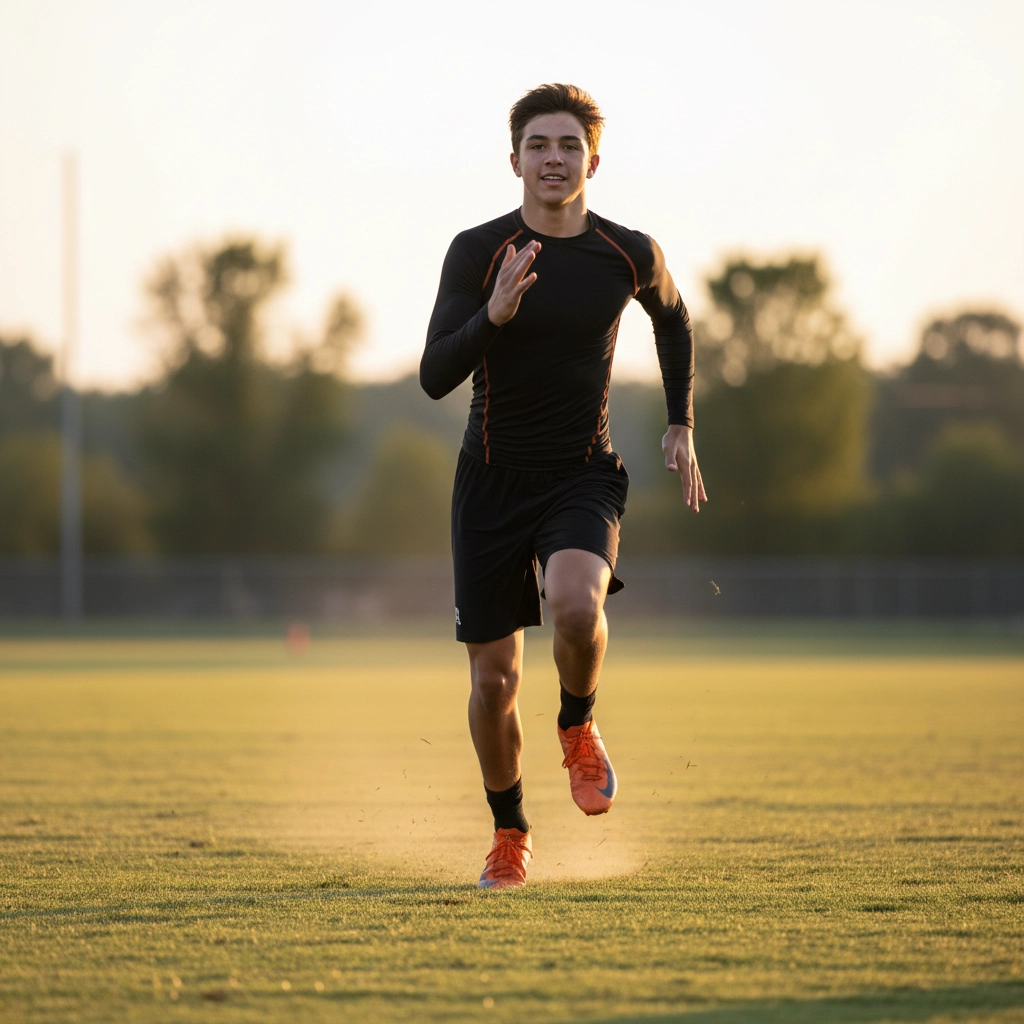
Myth-Busting in Action: How We Train Speed
The Mechanics Revolution
One of the biggest myths Francis debunked was that longer strides automatically mean faster speed. Our athletes were overstriding, creating a braking effect with every step.
During our spring training camp, we worked with Marcus, a 14-year-old receiver who was struggling to separate from defenders despite having good straight-line speed. Using video analysis, we discovered he was reaching too far forward with each stride, essentially putting on the brakes every time his foot hit the ground.
"We taught Marcus to focus on ground contact directly under his center of mass," says Coach Rodriguez. "Within three weeks, his 40-yard dash time dropped by 0.3 seconds – that's huge for a youth athlete."
The key was teaching him to "bounce, not reach." Instead of forcing longer strides, we focused on improving his posture and letting stride length increase naturally through better mechanics.
The Relaxation Factor
Another Francis principle that revolutionized our training: maximum speed requires relaxation, not tension. This was a game-changer for our athletes who were taught to "try harder" to run faster.
During our summer flag football season, we noticed our fastest athletes weren't necessarily the ones grimacing and straining the hardest. They were the smoothest runners – the ones who looked almost effortless at top speed.
"We started teaching our players that running faster means running smoother," explains Coach Thompson. "When you're fighting yourself, you're fighting speed."
Now our speed sessions include specific relaxation drills. Athletes practice running at 95% effort while staying loose in their shoulders and jaw. The results speak for themselves – our team's average sprint times improved across the board.

The High-Low System: Training Smarter, Not Harder
Francis's most important contribution might be the High-Low training system, and it's completely changed how we structure our practices.
Instead of grinding our athletes into the ground every day, we separate training into high-intensity speed/power days and low-intensity recovery/skill days. This protects the nervous system while allowing maximum effort when it counts.
"Our Monday and Wednesday sessions are all about speed and power," explains Coach Martinez. "Short sprints, explosive movements, maximum effort with full recovery between reps. Tuesday and Thursday are for technique, mobility, and conditioning – but never to exhaustion."
The difference is night and day. Our athletes arrive at speed sessions fresh and ready to perform at their peak, rather than dragging themselves through workouts on tired legs.
Real Results from Real Athletes
Take Jayden, a 13-year-old running back who joined our program last fall. When he started, his 40-yard dash was 6.2 seconds – average for his age group. After six months of Francis-inspired training, he's running 5.7 seconds and dominating at skill development camps.
"The biggest change wasn't just getting faster," Jayden says. "I learned how to run without wasting energy. Now I'm still fresh in the fourth quarter when other players are getting tired."
His mom, Sandra, noticed the difference immediately: "Jayden used to come home completely drained after practice. Now he's energized and confident. The coaching staff taught him that speed is about being smart, not just working hard."
Breaking the "More is Better" Myth
One of the hardest myths to overcome was the belief that more volume equals more speed. Francis proved the opposite – quality trumps quantity every time.
Our old approach had players running 300-yard shuttles until they could barely stand. Our new approach? Short sprints at maximum velocity with complete recovery between reps.
"We might only do 6-8 sprints in a speed session now, but every single one is at maximum effort with perfect mechanics," says Coach Rodriguez. "Compare that to 20 sloppy sprints done while fatigued, and it's obvious which approach develops more speed."

The proof is in performance. During our recent showcase events, our athletes consistently posted their best times of the season – a direct result of arriving fresh and ready to perform.
Arm Drive: The Overlooked Component
Francis taught that arms don't create speed – they regulate it. This insight transformed how we coach running mechanics.
Instead of telling players to "pump your arms harder," we focus on timing and rhythm. The arms should follow the legs, creating smooth coordination rather than forced power.
Aisha, one of our flag football standouts, struggled with her sprint starts until we fixed her arm mechanics. She was over-pumping her arms, which actually threw off her leg timing.
"Once we taught her to let her arms flow naturally with her leg rhythm, everything clicked," explains Coach Thompson. "Her acceleration improved dramatically, and she became one of our most explosive players."
The Speed Reserve Principle
Francis's concept of "speed reserve" – the idea that improving maximum speed benefits all other running speeds – has been a revelation for our football-specific training.
We now dedicate time to pure speed development, even though football rarely requires athletes to run in a straight line for 100 meters. The payoff comes in game situations: better acceleration out of cuts, higher top-end speed on breakaways, and superior conditioning during competition.
"When you raise your ceiling speed, everything underneath becomes easier," Coach Martinez explains. "A player who can run a 4.8 forty will cruise at speeds that exhaust someone whose max is 5.2."

Practical Tips for Parents and Athletes
Want to apply these principles at home? Here are three Francis-inspired tips any young athlete can use:
1. Focus on Mechanics First
Before worrying about times, master proper running form. Film yourself running and look for overstriding, excessive arm movement, or tension in the face and shoulders.
2. Quality Over Quantity
If you're doing speed training on your own, keep sprints short (20-60 yards) and rest completely between reps. Better to do 5 perfect sprints than 20 sloppy ones.
3. Separate Speed from Conditioning
Don't try to get faster while exhausted. Save sprint work for when you're fresh, and do conditioning separately.
The Future of Speed at Boardwalk Beasts
These Francis principles aren't just changing individual athletes – they're transforming our entire program culture. Players understand that speed is a skill to be developed systematically, not a genetic lottery they either won or lost.
"Our athletes are more confident because they know they can get faster," says Coach Rodriguez. "They see teammates making dramatic improvements and realize it's possible for them too."
As we head into our next season, we're expanding these principles across all our programs. Every athlete who trains with Boardwalk Beasts will learn the science of speed development, not just the mythology.
The results speak for themselves: faster times, better game performance, and athletes who understand that speed truly is a trainable skill. Charlie Francis proved it with Olympic sprinters, and we're proving it works just as well for youth football players.
Ready to unlock your speed potential? Check out our upcoming training programs and discover what Francis-inspired speed development can do for your game.
About Author