5 Ways to Improve at Wide Receiver Position in American Football
5 Ways to Improve at Wide Receiver Position in Football
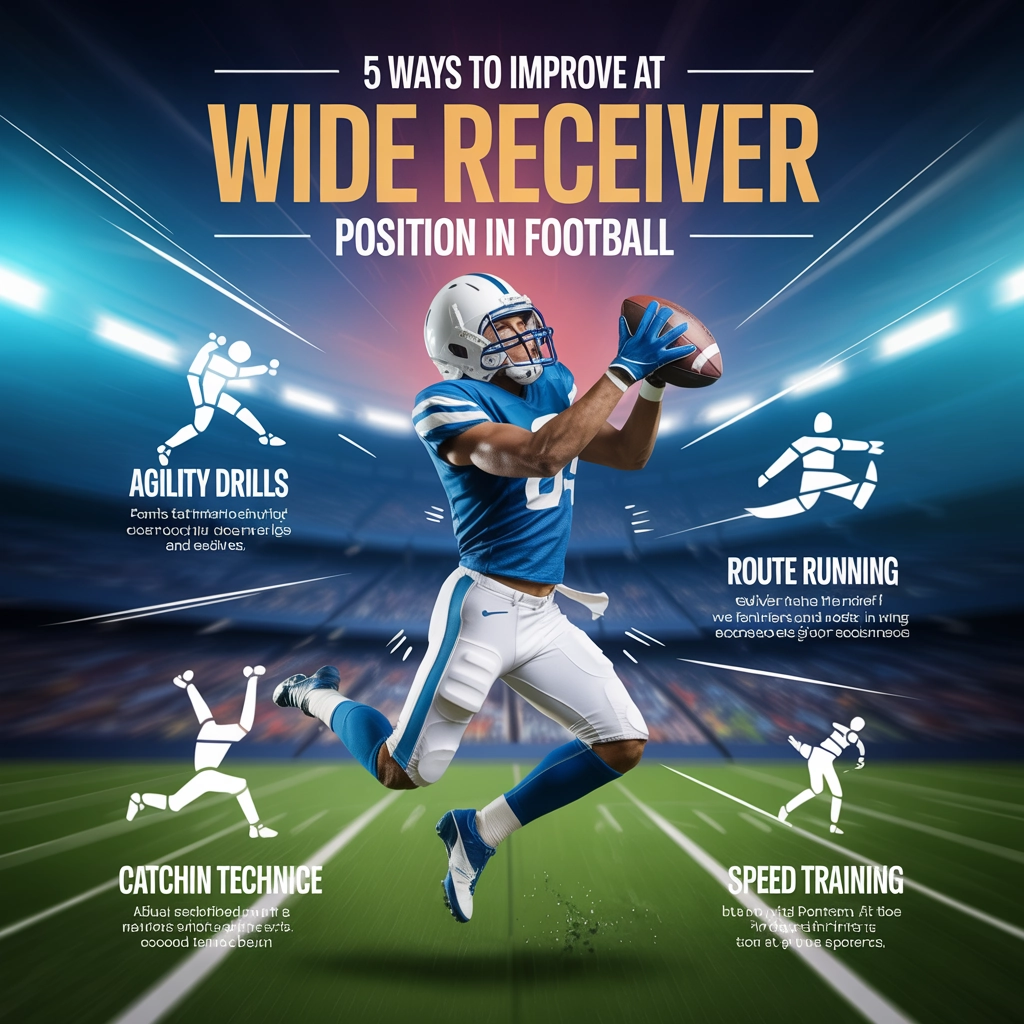
The wide receiver position is often considered one of the most exciting in football. From spectacular catches to game-winning touchdowns, wide receivers frequently provide the highlights that fans remember long after the game ends. But becoming an elite receiver takes more than just natural talent—it requires dedication, technical skill, and consistent practice.
At Boardwalk Beasts Football Club, we've seen countless young athletes develop into standout receivers through focused training and the right guidance. Whether you're just starting out or looking to take your game to the next level, these five proven methods will help you elevate your performance at the wide receiver position.
1. Master Your Route Running
Route running is the foundation of playing receiver. The ability to run crisp, precise routes creates separation from defenders and makes you a reliable target for your quarterback.
Why It Matters
Even receivers with average speed can become exceptional targets with excellent route running. When you execute routes with precision, you:
- Create separation from defenders
- Make yourself predictable to your quarterback
- Get open even against tight coverage
- Force defenders to respect your routes, opening opportunities for double moves
How to Improve
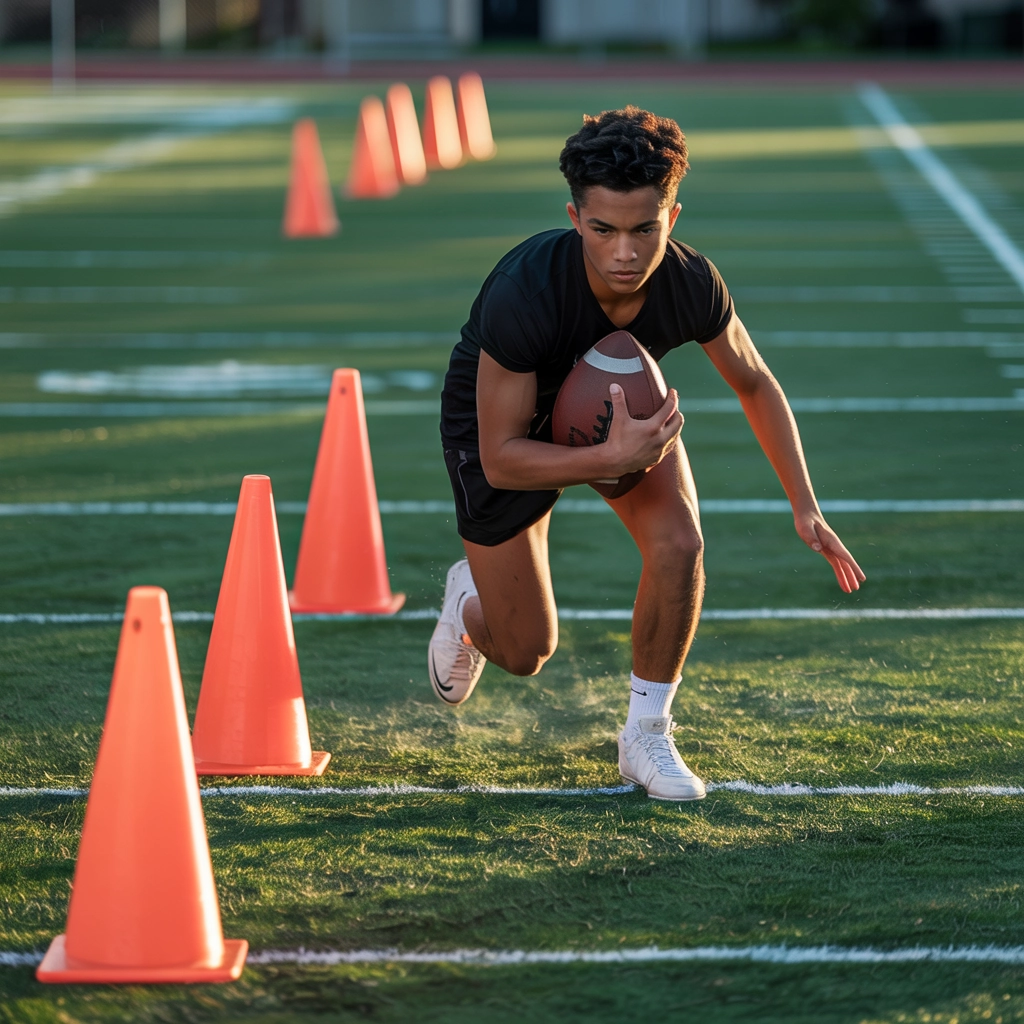
Cone Drills: Set up cones to simulate different routes in your team's playbook. Practice running each route with proper technique:
- Start with an explosive burst off the line
- Keep your pad level low through your breaks
- Make sharp, decisive cuts
- Maintain speed throughout the route
Stem Work: Practice "stemming" your routes by attacking defenders vertically before making your break. This forces defenders to respect your deep threat potential before you break into your actual route.
Film Study: Watch how elite receivers run the same routes you're working on. Pay attention to how they use head fakes, body positioning, and changes of pace to create separation.
Coach Tip: "The difference between being open and covered is often just six inches of separation. Precise route running creates that critical space."
2. Develop Reliable Hands
All the route running in the world won't matter if you can't secure the catch. Great receivers are known for their "hands of glue"—the ability to catch consistently in all situations.
Why It Matters
Reliable hands make you:
- A trusted target on crucial downs
- Effective in tight coverage situations
- Valuable in the red zone
- Confident to make difficult catches
How to Improve
Tennis Ball Drills: Have a partner throw tennis balls at you from various angles and distances. The smaller ball forces you to focus on hand-eye coordination.
Over-the-Shoulder Catches: Practice tracking and catching balls thrown over your shoulder while running at full speed—one of the most difficult but important catching skills.
The Gauntlet: Line up several teammates or coaches to throw balls at you in rapid succession as you run across the field, forcing you to catch, secure, and drop quickly.
Hand Strengthening: Use hand grippers, finger exercises, and wrist rolls to develop stronger hands and forearms, which help you secure catches in traffic.
Remember: Always catch with your hands, not your body. Extend your hands away from your body to "snatch" the ball from the air, keeping your thumbs together on catches above your waist and pinkies together on catches below the waist.
3. Build Speed and Explosiveness
Speed creates opportunities. The faster you can accelerate and reach top speed, the more dangerous you become as a receiver.
Why It Matters
Superior speed:
- Puts stress on defensive coverages
- Creates big-play potential
- Earns respect from defenders who must play off coverage
- Gives you advantages on contested catches
How to Improve
Sprint Work: Incorporate various sprint distances into your training:
- 10-yard bursts for acceleration
- 40-yard sprints for game speed
- 100-yard runs for endurance
Plyometric Exercises: Integrate explosive movements that translate to football performance:
- Box jumps
- Broad jumps
- Bounding exercises
- Medicine ball throws
Hill Sprints: Find a steep hill and sprint up it 8-10 times with full recovery between efforts. This builds both explosive power and mental toughness.
Resistance Training: Use parachutes, sleds, or resistance bands while running to build power that transfers to unresisted game situations.
Coach Tip: "Speed work isn't just about running—it's about explosive first steps. Most separation happens in the first three yards off the line."

4. Improve Your Footwork and Agility
Precise footwork allows you to execute routes effectively, create separation, and maintain balance through catches and after the catch.
Why It Matters
Superior footwork:
- Enables quick releases against press coverage
- Creates sharp, efficient cuts
- Helps maintain balance through contact
- Maximizes yards after catch
How to Improve
Ladder Drills: Use an agility ladder to practice quick, precise foot movements:
- High knees
- Lateral shuffles
- In-and-outs
- Hopscotch patterns
Quick Feet Drills: Practice toe taps, high knees, and fast feet in place to develop foot speed and coordination.
Line Work: Practice staying on a straight line while doing various footwork drills to develop balance and body control.
Release Techniques: Work on different release moves against press coverage:
- Swim move
- Rip technique
- Hesitation step
- Stutter and go
At Boardwalk Beasts practice sessions, we emphasize these footwork fundamentals with all our receivers, regardless of age group. Even our youngest players can develop these critical skills with consistent practice.
5. Increase Your Football IQ and Field Awareness
The best receivers don't just run routes—they understand defenses, recognize coverages, and make smart adjustments during plays.
Why It Matters
High football IQ:
- Helps you find soft spots in zone coverage
- Allows you to adjust routes based on defensive looks
- Improves timing with your quarterback
- Creates opportunities for broken-play success
How to Improve
Film Study: Regularly review game film of both your performances and professional receivers. Look for:
- How defenses react to certain formations
- How elite receivers adjust their routes against different coverages
- Techniques used to beat press, man, and zone coverages
Coverage Recognition: Learn to quickly identify different coverages:
- Cover 1 (man with single high safety)
- Cover 2 (two deep safeties)
- Cover 3 (three deep zones)
- Man vs. zone indicators
Sideline Awareness: Practice toe-tapping drills along the sideline to develop awareness of your position on the field.
Quarterback Connection: Spend extra time working with your quarterback outside of regular practice to develop chemistry and timing.

Putting It All Together: The Complete Receiver
What separates good receivers from great ones is the ability to combine all these skills seamlessly. At Boardwalk Beasts Football Club, we've seen tremendous growth in players who commit to developing each of these areas.
A comprehensive training plan should include:
- Daily Fundamentals: Catch 50-100 balls every day, even if it's just against a wall or with a family member
- Weekly Focused Training: Dedicate specific days to route running, speed work, and agility training
- Mental Development: Study film and understand coverages for at least 15-20 minutes daily
- Strength and Conditioning: Don't neglect the weight room—stronger receivers can fight through contact
- Recovery: Allow time for proper rest and recovery to prevent injuries and allow for growth
For youth players especially, focus on developing proper technique before worrying about complex routes or schemes. Building a solid foundation in the fundamentals will pay dividends as you advance in your football career.
The Boardwalk Beasts Advantage
At Boardwalk Beasts Football Club, our coaching staff implements these training methods through age-appropriate drills and progressions. Our receivers at all levels—from our 12U teams to our senior squads—follow development plans that emphasize these five critical areas.
The results speak for themselves in our stats and the number of players who have advanced to higher levels of competition through our recruiting program.
Remember, becoming an elite receiver doesn't happen overnight. It takes consistent practice, attention to detail, and a willingness to work when others aren't. But for those who commit to excellence, few positions offer more excitement and opportunity to impact the game than wide receiver.
Whether you're looking to dominate in tackle football or make plays in our girls' travel flag program, these fundamentals apply across all formats of the game. Master these five areas, and you'll see dramatic improvements in your performance at the wide receiver position.
Keep working, stay focused, and trust the process. The best receivers aren't born—they're built through dedication and smart training. We hope to see you making plays on the field soon!
About Author