
How to Choose the Best 7v7 Program: What Parents Don’t Know About “Super Teams” vs. Real Development
You're scrolling through Instagram, and you see it: another team's highlight reel from a 7v7 tournament in Florida. Confetti cannons. Championship trophies. Kids flexing in matching gear. The caption reads: "UNDEFEATED CHAMPS 🏆💯."
Your kid's watching over your shoulder. "Dad, can I play for them?"
Here's the problem: That team might look elite, but it could be the worst thing for your son's development. Before you drop $2,500 on travel fees and uniforms, you need to understand the difference between a "Super Team" and a program that actually develops players for high school and college football.
Looking for professional coaching and real development? Check out our programs at Boardwalk Beasts.
The "Super Team" Trap: All Flash, No Foundation
Let's call it what it is: Super Teams are showcase squads built to win plastic trophies in February and March. They recruit the fastest, biggest, most physically developed kids from multiple zip codes, throw them together for a few practices, and then parade them around 7v7 tournaments to rack up wins.
Sounds great, right? Your kid gets to say he played on a championship team.
Here's what they don't tell you:
These programs don't develop players, they collect them. If your son is already a stud athlete, a Super Team will give him exposure. But if he needs to improve his route-running, learn how to read coverages, or develop better hands? He's getting nothing. Super Teams prioritize winning now over teaching skills that matter for the next level.

Playing time goes to the "best" kids, not the kids who work the hardest. In developmental programs, effort and improvement earn reps. In Super Teams, the depth chart is decided before the first practice. If your kid isn't already at the top, he's riding the bench while two or three superstars touch the ball 90% of the time.
The coaching is shallow. Super Team coaches care about one thing: the W. That means they'll run the same three plays all game because those plays work with their top-tier athletes. They're not teaching your son how to defeat press coverage, how to stem his route based on leverage, or how to adjust to different defensive shells. They're just calling "Go" and hoping their fastest kid runs past everyone.
And here's the kicker: None of this helps him start on Friday nights in the fall.
What Real Development Looks Like
Developmental programs flip the script. They're not focused on collecting elite talent, they're focused on creating it.
Here's how you spot a program that actually develops players:
Professional coaching with a curriculum. Real programs have structured practice plans. Coaches teach position-specific techniques every single session: footwork for route breaks, hand placement for press releases, how to adjust speed coming out of cuts. Youth football training isn't just "run around and catch passes." It's structured, intentional skill-building.
Everyone gets coached, everyone gets reps. In developmental programs, playing time is distributed intentionally. Coaches rotate positions so athletes learn multiple roles. The goal isn't just to win the next 7v7 tournament, it's to prepare every kid to contribute at the high school level and beyond.
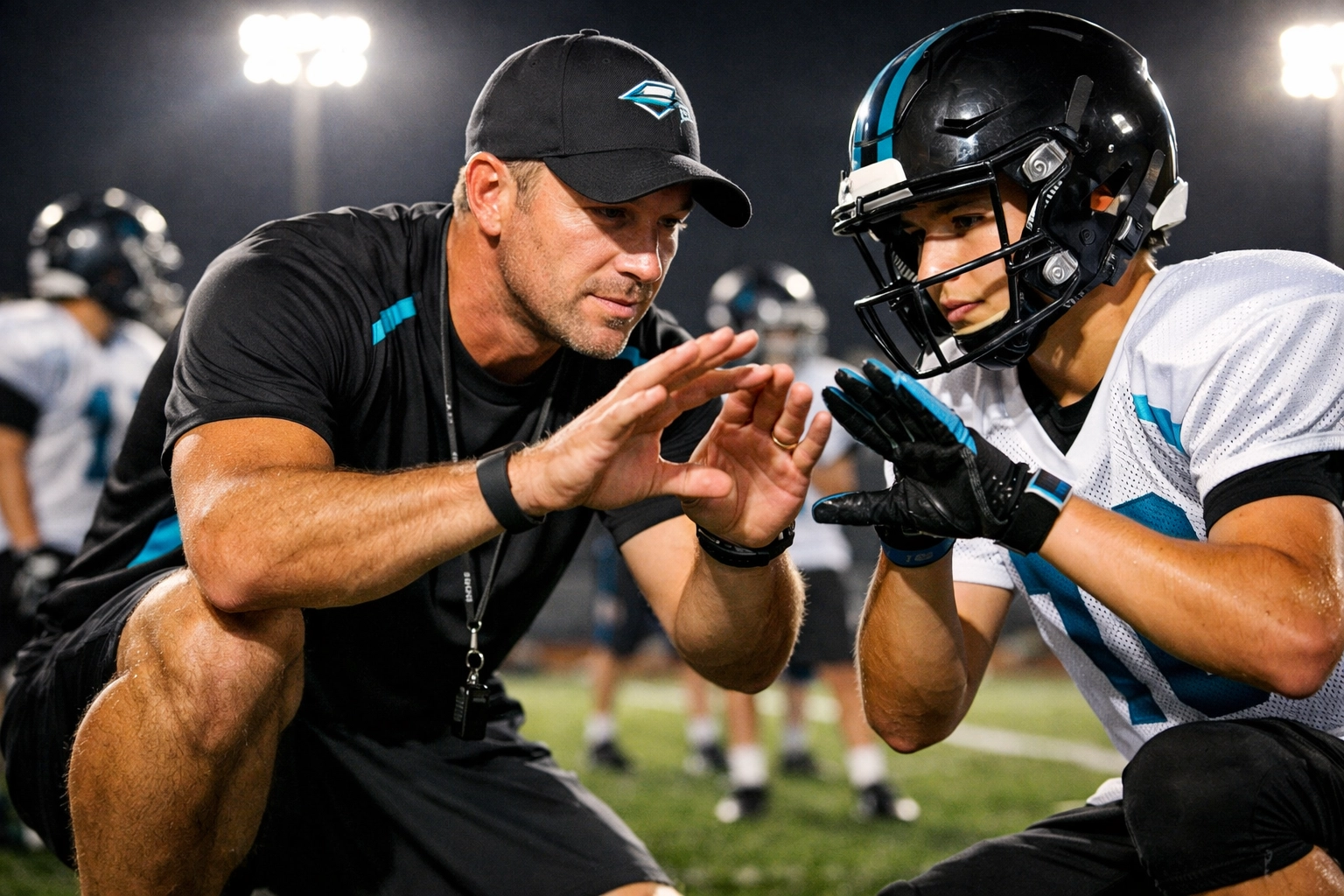
They prioritize football IQ over athleticism. Sure, speed matters. But understanding why a route works against Cover 3 versus Cover 2 is what separates high school role players from college prospects. Developmental programs teach route concepts, defensive recognition, and situational football. Kids learn how to think like a receiver, not just run fast.
They track individual progress, not just team wins. Great programs keep film on each player. They break down tape in position meetings. They give specific feedback: "Your stem needs to be tighter here." "You stopped your feet on that break." That kind of coaching: professional coaching: is how players actually improve.
The Trophy Doesn't Mean What You Think It Means
Let's be blunt: Winning a 7v7 tournament in February has zero impact on whether your son starts in Week 1 of his high school season.
High school coaches don't care if your kid's travel team went 8-0 at a showcase. They care if he can run a 9-route with proper technique. They care if he knows how to read a safety's leverage. They care if he can catch a ball in traffic and not drop it when he gets popped.
That plastic trophy sitting on your shelf? It doesn't teach any of those things.
Developmental programs understand this. They use 7v7 tournaments as teaching tools, not as the endgame. After each tournament, the best coaches sit down with film and break down what worked, what didn't, and what needs to be fixed before tackle season. The tournament is a classroom, not a validation exercise.
What to Look For When Choosing a 7v7 Program
If you're evaluating programs, here are the questions that separate the real from the fake:
1. What's the coach-to-player ratio? If one coach is trying to manage 30 kids, nobody's getting real instruction. Look for programs with multiple position coaches and a structured staff.
2. How is playing time determined? If the answer is "our best players play the most," run. You want a program where effort, improvement, and coachability earn reps.
3. Do they film practices and games? If a program isn't using film to coach, they're not serious about development. Film doesn't lie. It shows exactly what a player needs to work on.
4. What's the offseason commitment? Developmental programs don't just pop up in January and disappear in April. They run year-round camps, skill sessions, and training. They're invested in long-term development, not just a quick tournament circuit.
5. What's their track record with recruitment? Ask how many players from the program have gone on to play varsity high school football, earn college scholarships, or get recruited. If they can't answer that, they're just a travel team, not a development program.
The Boardwalk Beasts Difference
At Boardwalk Beasts Football Club, we're not chasing trophies. We're building football players.
Our approach is simple: Professional coaching, structured development, and preparing athletes for the next level. Whether your son is transitioning from middle school to high school or gearing up for recruitment, our staff focuses on the fundamentals that translate to Friday night lights and beyond.
We teach technique, not tricks. Every position coach on our staff has a curriculum. We drill footwork, hand placement, route stems, and release packages. We don't just throw kids out there and hope they figure it out. We break down film with our players. We show them what they did right, and more importantly, what needs to be fixed.
We prioritize individual development over team wins. Don't get it twisted: we compete hard, and we compete to win. But we measure success by how much each player improves from Week 1 to Week 12. Every athlete gets reps. Every athlete gets coached. Every athlete gets better.
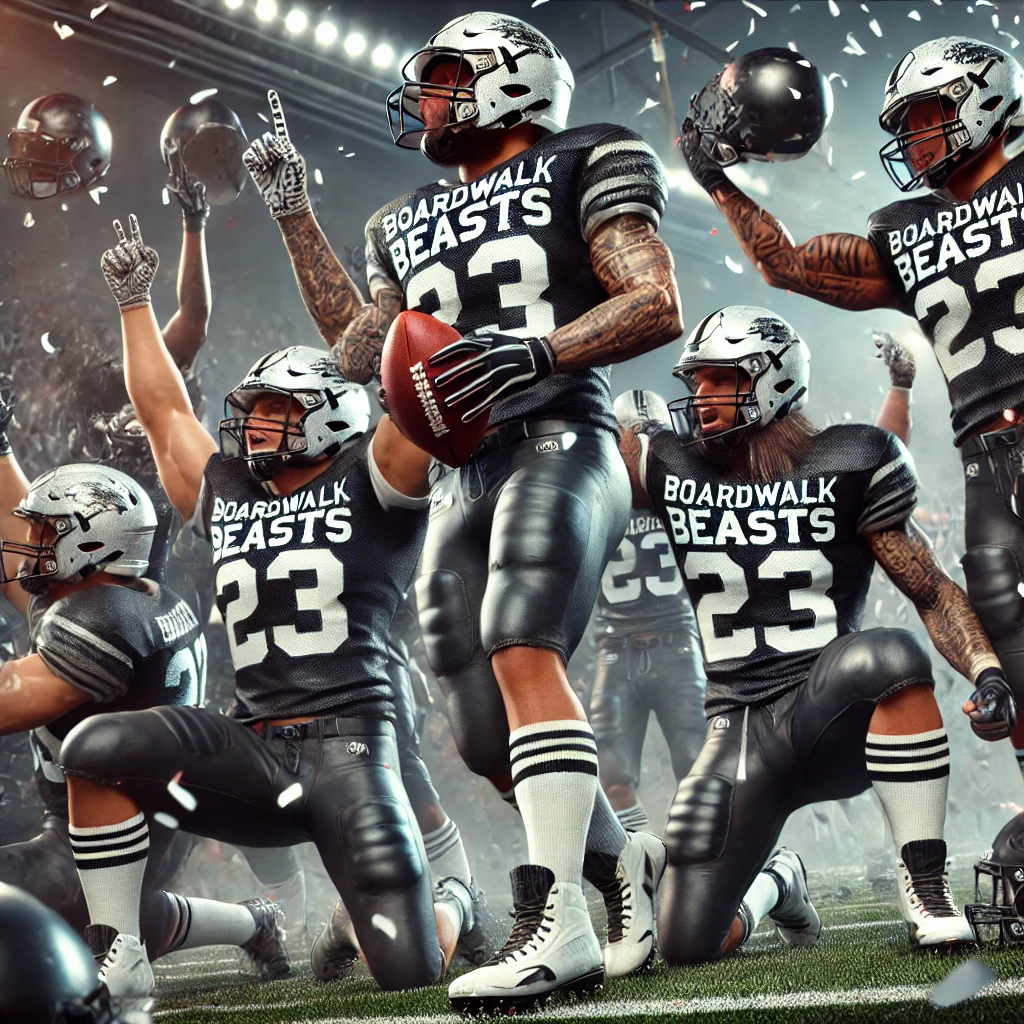
We prepare players for what's next. Whether that's starting varsity as a freshman, earning a scholarship offer, or simply becoming a better football player, our programs are designed to build the skills that matter at every level. We don't just play 7v7 tournaments: we use them as teaching moments to prepare athletes for tackle football, recruitment, and the grind of high school ball.
And here's the thing: We're in this for the long haul. Boardwalk Beasts isn't a pop-up program that shows up for a few months and disappears. We're a year-round club with camps, skill sessions, and a full developmental pipeline. We're building relationships with players and families that last through high school and into college.
The Bottom Line for Parents
Choosing the right 7v7 program isn't about Instagram highlights or trophy shelves. It's about finding a program that actually prepares your son for the next level.
Super Teams will give you a few wins and some flashy content. Developmental programs will give your son the technique, football IQ, and work ethic to succeed when it actually matters.
So before you sign that check, ask yourself: Do you want your kid to win a tournament in February, or do you want him to start on Friday nights in the fall?
The right answer will point you to the right program.
Published by Boardwalk Beasts Football Club | For more resources on youth football training, recruitment, and professional coaching, visit boardwalkbeastsfb.com and coachschuman.com.
About Author
