
Beyond the ACL: 5 Mental Shifts That Turn Sports Injuries Into Competitive Advantages
At Boardwalk Beasts Football Club, we know that the game doesn't stop when you're on the sideline. Whether you're recovering from an ACL tear, a broken bone, or a serious concussion, the mental battle is just as crucial as the physical rehab. If you're navigating an injury or supporting an athlete who is, check out our mental performance resources and athlete development programs designed to keep you in the game, even when you're off the field.
One moment, you're the starter. The crowd is roaring. Your name is on the depth chart. Then, in a single violent twist, it all vanishes. The stadium lights fade to the harsh fluorescents of the training room. Ice packs. Elevation. The hollow echo of crutches on tile.
For elite competitors, the physical pain of an injury is often manageable. It's the silent sidebar, the devastating mental isolation, that destroys careers. While your teammates are grinding through two-a-days, you're trapped behind the curtain, wrestling with toxic "what-if" thoughts: What if I lose my edge? What if I get hurt again? What if I'm never the same?
Isolation is the silent career-killer. The body heals on a predictable timeline, but the mind can stay trapped in the "suck" long after the doctor clears you. However, and this is critical, if handled with psychological precision, an injury period can be transformed from a season of loss into a season of mental training that provides a permanent competitive edge.
Here are the five mental shifts that separate athletes who return stronger from those who never quite get back.
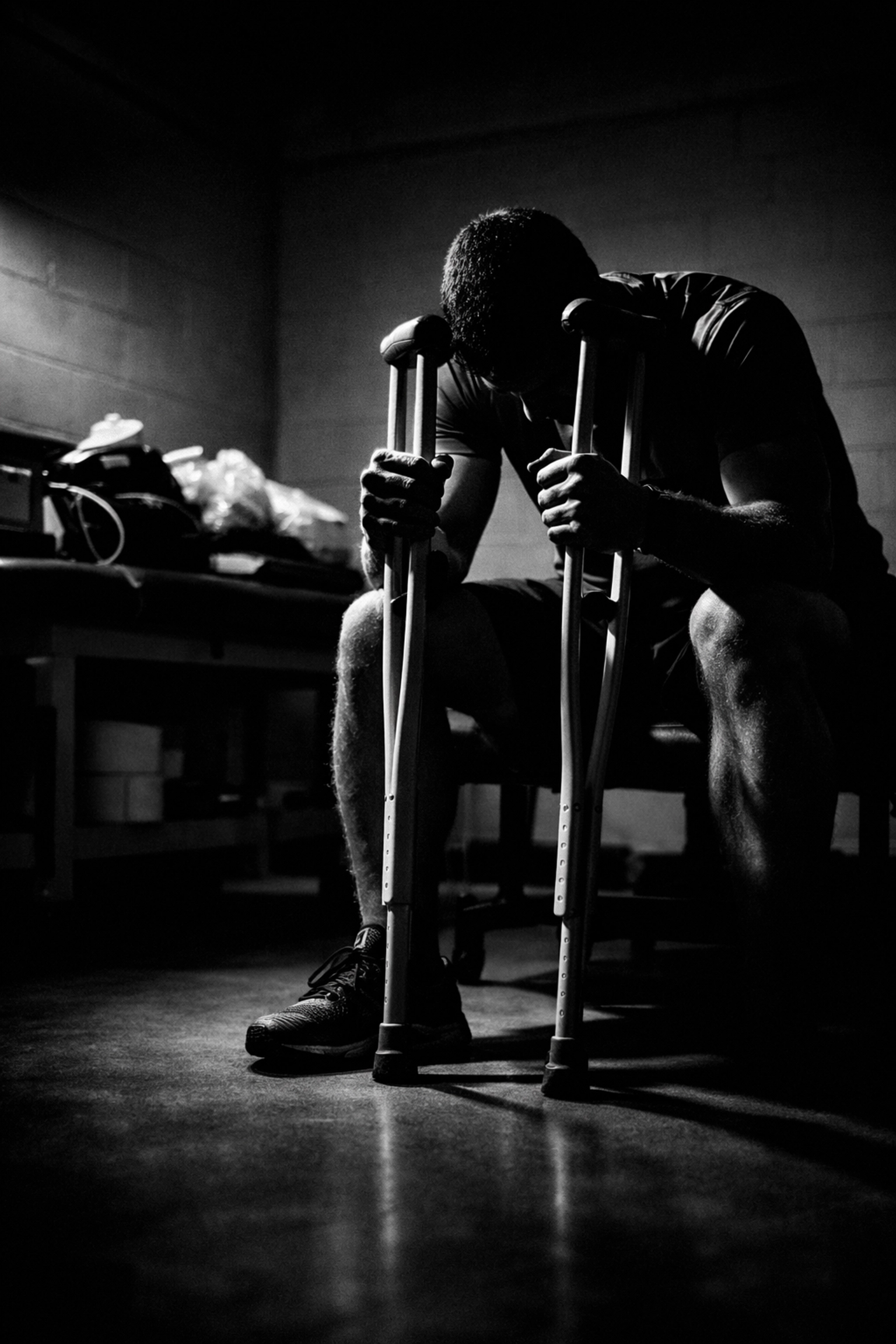
Shift 1: The Identity Crisis, Confronting the Void
An injury is never just a medical event. It's an existential threat. For an athlete like a high school quarterback or a running back chasing a college offer, tearing an ACL forces a brutal confrontation with a singular question: "Who am I without the jersey?"
Sports psychologist Georgia Miller puts it plainly: "That's what you are. You're a quarterback. You tear your ACL, and suddenly it's, 'Oh my gosh, who am I? What am I without it?' The identity part is just as devastating as the physical injury."
This crisis intensifies with age and stakes. Youth athletes often have the cognitive flexibility to "find something else to do" when sidelined: they can dive into video games, school projects, or other hobbies. But high school athletes face the crushing weight of lost opportunities, scholarship anxiety, and the fear of falling behind their peers. By the time an athlete reaches the college or elite level, their identity is public-facing. Teammates, coaches, and fans know them only as "the safety" or "the receiver." When that role is stripped away, the psychological void can spiral into genuine depression if not actively addressed.
The shift: You must do identity work. Write down three things you value about yourself that have nothing to do with football. Are you a good teammate? A problem-solver? A leader in your community? These anchors will keep you grounded when the game is temporarily taken away.
Shift 2: "Sitting in the Suck": The Foundation of Recovery
The most common mistake parents and coaches make is the immediate pivot to "toxic positivity." They rush to silver linings before the athlete has even processed the trauma: "It's okay, you'll be back stronger!" "Everything happens for a reason!" "At least it's not worse!"
Miller's methodology rejects this. In her first session with an injured athlete, she insists on "Sitting in the Suck." She asks the hard questions: "What's the worst part about this?" "How crappy does it feel right now?"
By validating the crappiness of the situation, Miller builds a necessary psychological foundation. This isn't about wallowing: it's about acknowledging reality. You cannot build a resilient comeback on a foundation of suppressed frustration. Only after the athlete has felt the full weight of the "suck" can they authentically pivot toward the next phase.
The shift: Give yourself permission to be angry, sad, or frustrated. Set a timer for 15 minutes and let yourself vent: write it down, talk to someone, or punch a pillow. Then, move forward. You're not weak for feeling it; you're smart for processing it.
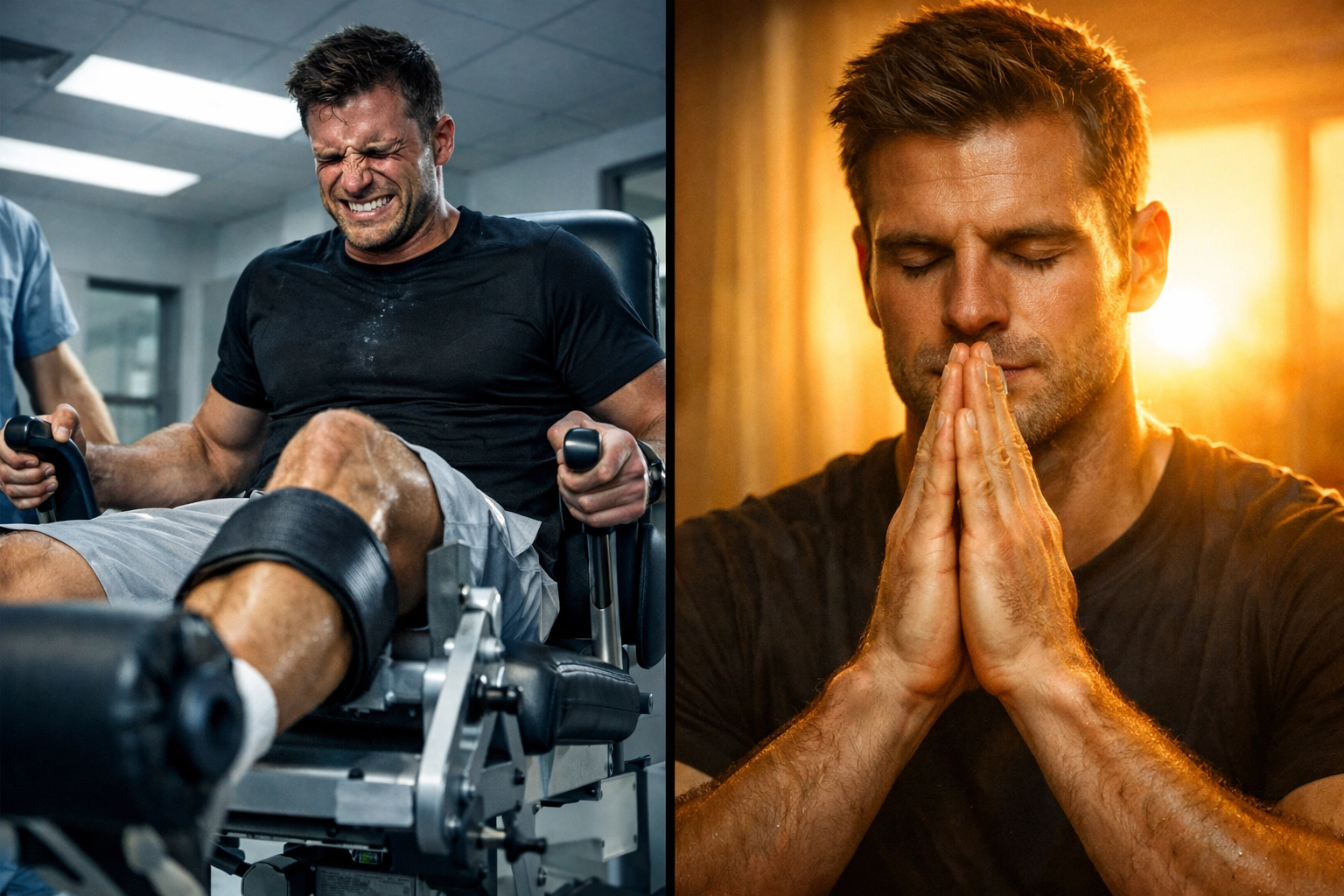
Shift 3: Routine as Medicine: Fighting the "Lost Number" Syndrome
In the old-school era of coaching, an injured player was often treated as a "lost number": a body that no longer contributed to the win column. This neglect breeds isolation. Modern programs like Boardwalk Beasts reject this model entirely. An injured Beast is still a Beast.
To fight the mental spiral, maintaining a rigid schedule is non-negotiable. Coach Schuman recalls his own career-threatening back injury. He purposefully scheduled his physical therapy sessions during team practice times: not to avoid the team, but to stay locked into a professional rhythm. It kept him in a competitive headspace, ensuring he was still "working" even when he couldn't suit up.
Daily Normalcy Anchors:
- Maintain the Academic/Professional Clock: Wake up at the same time. Attend classes or training sessions. Keep your routine intact.
- Team Presence: Attend practices and meetings. Stay woven into the team culture. You're not a spectator: you're a student of the game.
- The "Other" Training: Focus on what's not injured. A linebacker with a torn ACL can still hammer upper body work and core stability. A receiver with a broken hand can still drill footwork and route concepts. A junior hockey player with a shoulder injury spent six months crushing lower-body training and returned to the ice faster than before: a clear competitive advantage born from adversity.
- Non-Transactional Support: Engage with mental coaches, trainers, or mentors who provide an objective space to vent without the pressure of performance metrics.
The shift: Treat PT like practice. Treat film study like reps. Your job hasn't changed: it's just looked different for a season.
Shift 4: The Gratitude Shift: Forging Mental Grit
Here's the counter-intuitive truth: long-term injury can kill performance anxiety.
Before the injury, many athletes are paralyzed by the fear of making mistakes, getting benched, or letting the team down. An injury realizes those fears: you're already out of the game. You've already survived the worst-case scenario. And when you return, that previous anxiety is often replaced by a profound gratitude shift.
Athletes who have navigated the darkness of a long recovery develop a callous of resilience. They return with a level of grit that their healthy peers lack. They play more freely because they've already been to the bottom and climbed back out. The fear of failure is replaced with an aggressive appreciation for every snap, every rep, every moment in the jersey.
As Miller notes: "The times of uncertainty teach you things that certainty couldn't."
The shift: When you step back on the field, remind yourself: I earned this. I fought for this. I'm not afraid anymore.
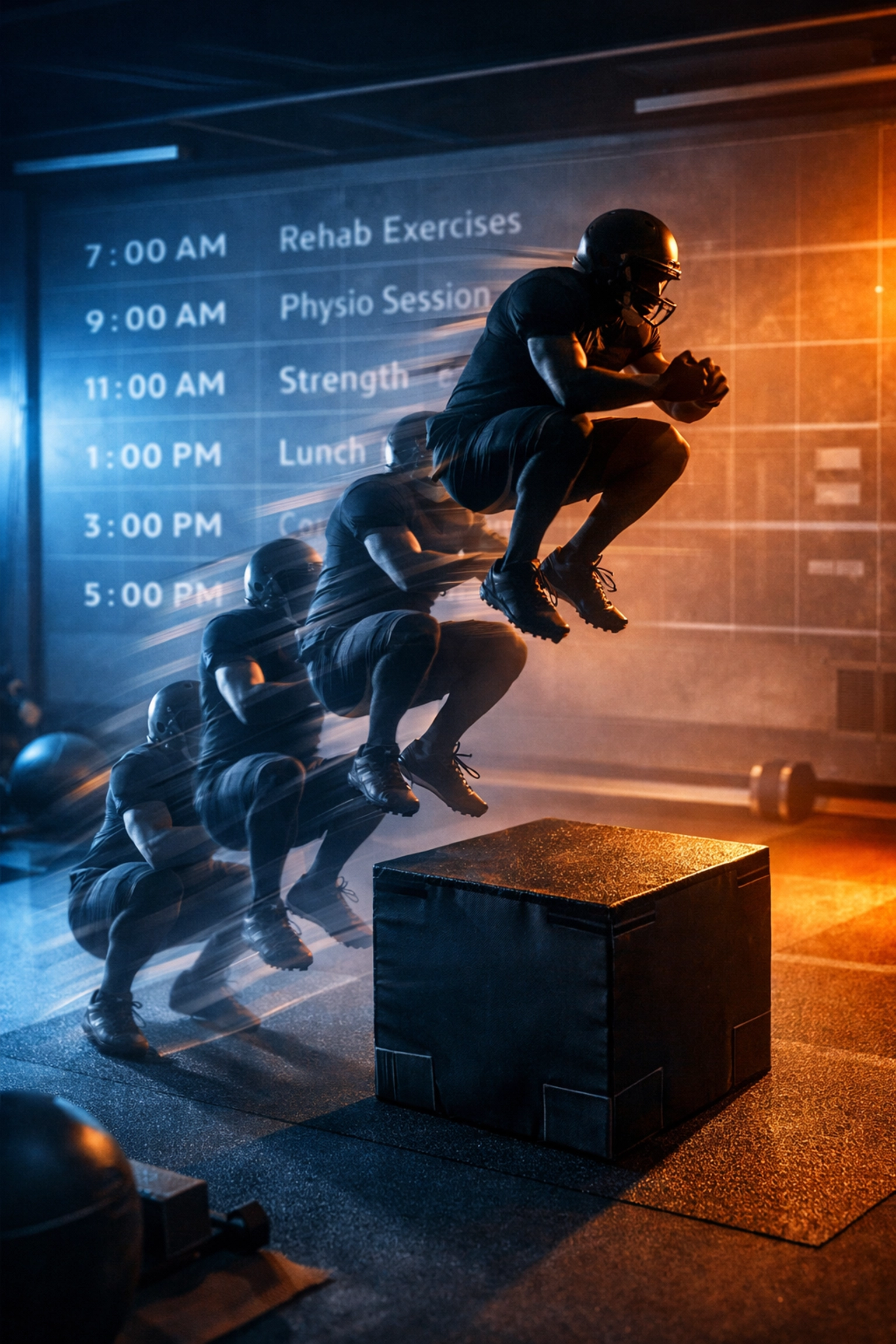
Shift 5: Modern Coaching: Dismantling the "Hush-Hush" Culture
The 180-degree shift in modern training rooms has replaced "snarky comments" with collaborative care. In the past, old-school coaches might walk by an injured player and simply shake their head: a gesture that implied the athlete was failing the team by being hurt. Mental health was "hush-hush." Admitting struggle was seen as weakness.
Today's elite environments: like the one we've built at Boardwalk Beasts: prioritize the quick check-in. A thirty-second text from a coach: "How's the PT going? Need anything?": can significantly reduce recovery-impeding anxiety. By fostering a collaborative relationship between coaches, trainers, and mental health experts, the athlete feels valued as a human being, not just a performer. This support accelerates the physical healing process by lowering stress hormones like cortisol.
The shift: Coaches: reach out. Parents: ask how your kid is doing mentally, not just physically. Athletes: don't be afraid to admit you're struggling. The strongest players are the ones who ask for help.
Conclusion: The Long Game of Resilience
Recovery is not a sprint. It's a long game of "mini-wins." Whether it's bending a knee one degree further, reclaiming a single pound of muscle, or simply showing up to the training room every day, these small victories build the character required for elite performance.
Injury recovery is training the brain just as PT trains the muscle. The injury may have taken your sport for a season, but it provides an unfiltered look at your foundation. As you fight your way back, ask yourself: If football was taken away tomorrow, what part of my character remains, and is it strong enough to carry me back?
At Boardwalk Beasts Football Club, we believe that champions are built in the moments no one sees: the early morning PT sessions, the lonely film room grind, the mental battles won in silence. If you or your athlete is navigating an injury, we're here to help. Explore our training programs, connect with our coaching staff, or check out our athlete development resources designed to keep you mentally sharp during recovery.
The comeback is always stronger than the setback. Now get to work.
About Author
