
The Chess Match on Grass: 5 Pre-Snap Secrets to Breaking Any Defense
Want to learn elite-level football tactics that will give your team a competitive edge? Check out our programs at myfootballcamps.com and visit boardwalkbeastsfb.com for year-round training opportunities that teach these exact concepts.
The Invisible Game: Winning Before the Snap
Here's the truth most young players don't realize: the best plays in football are won before the ball is ever snapped.
While everyone in the stands is watching the quarterback take the snap, elite programs are playing a completely different game: a tactical chess match that happens in the five seconds leading up to the play. Through sophisticated shifts and motions, offenses can force defenses to reveal their coverage, compromise their assignments, and create mismatches that lead to explosive plays.
At the highest levels of college and pro football, offensive coordinators have turned pre-snap movement into a surgical weapon. By studying the technical schematics from programs like UNLV, we can decode exactly how these tactics work: and more importantly, how you can apply them at the youth and high school level.
Let's break down five pre-snap secrets that can transform your offense from predictable to unstoppable.
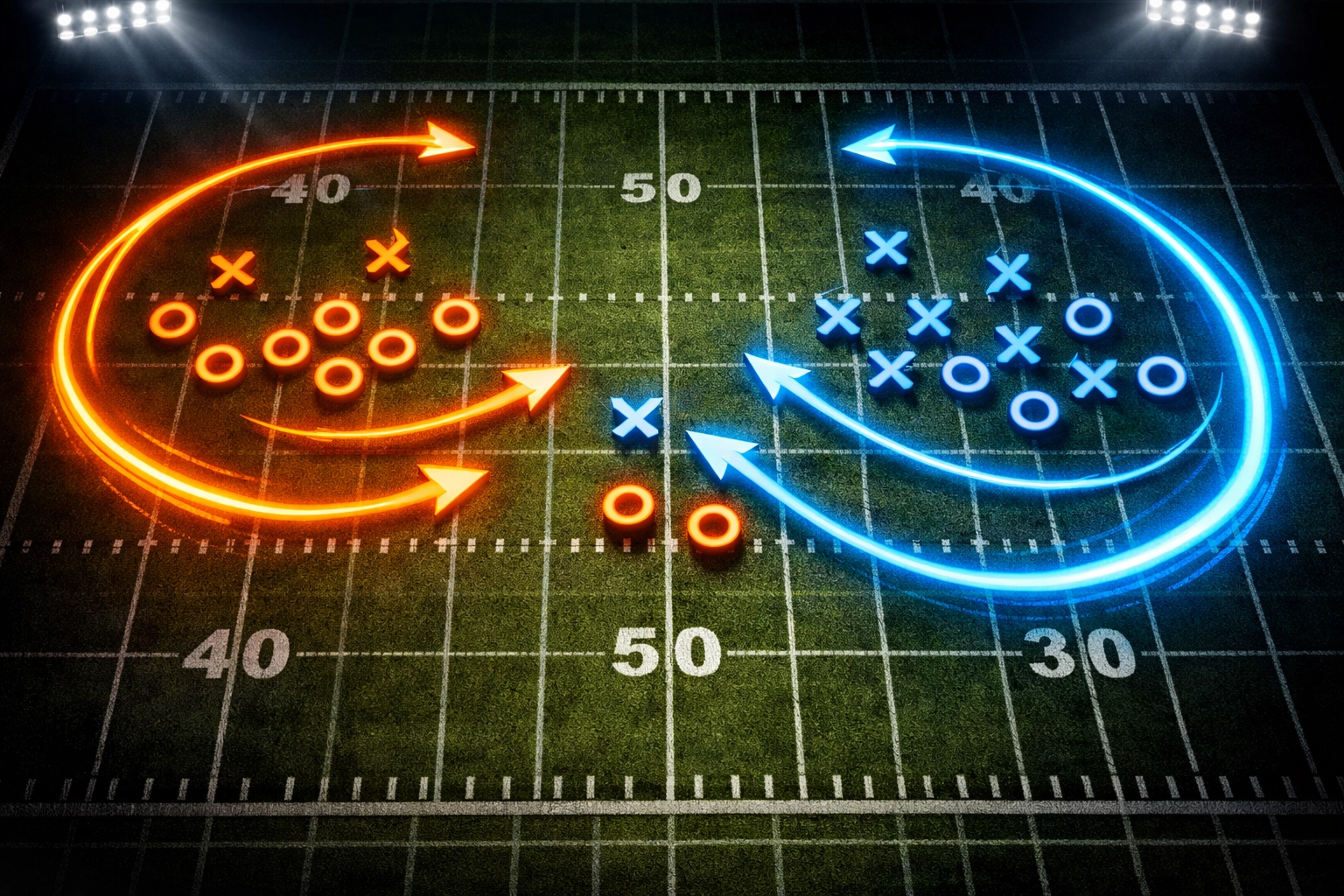
Secret #1: The Boomerang: Strategic Simulation That Freezes Defenses
The first weapon in elite pre-snap strategy is what's called "strategic simulation": using motion to fake one thing while doing another.
The Boomerang concept is beautifully simple but brutally effective. Here's how it works:
A receiver starts in a normal alignment, then goes in motion across the formation toward the backfield, following a curved "bubble back" path. This movement simulates a Bubble Screen or Swing Pass threat. Defensive players: especially the nickel corner or apex defender: see this motion and immediately start creeping toward the line of scrimmage to defend the quick screen.
But here's the trap: just as the defense commits, the receiver bursts back to their original alignment right as the ball is snapped.
What happens? The defense is caught completely out of position. Their last-second adjustment becomes useless. The linebacker who cheated forward to stop the screen is now too shallow to cover the seam. The safety who rotated down can't recover to his deep zone responsibility.
The coaching point: The motion must be full speed and sell the screen threat completely. If you half-speed the fake, the defense won't bite.
This is the essence of high-level football: making the defense commit to stopping something you're not actually doing, then attacking the space they vacated.
Secret #2: The X RUSH: Creating Eye Discipline Errors
While the Boomerang uses simulation, the X RUSH uses pure speed and chaos to overload defensive processing.
This isn't just one player in motion: it's a coordinated, multi-player distraction designed to create an immediate communication breakdown. The concept typically involves the X receiver, Z receiver, and a backfield player all moving at the same time in what looks like a full-speed jet sweep action.
The key instruction from elite playbooks: "Full speed fake jet motion across the entire formation."
Why does this work? Because modern defenses rely on pattern recognition and eye discipline. Defenders are trained to read specific keys: the offensive line's movement, the backfield's action, receiver releases. But when you create high-velocity lateral movement across the entire formation, you force defenders to process too much information at once.
The result: "Eye discipline" errors.
The cornerback gets so fixated on the horizontal flash of the jet motion that he loses track of his vertical responsibility. The linebacker hesitates for a split second trying to determine if it's a real jet sweep or play-action. The safety takes a bad step because his keys conflict.
In football, a split-second hesitation is all you need. By the time the defense realizes the jet sweep was a fake, your real play is already hitting the second level.
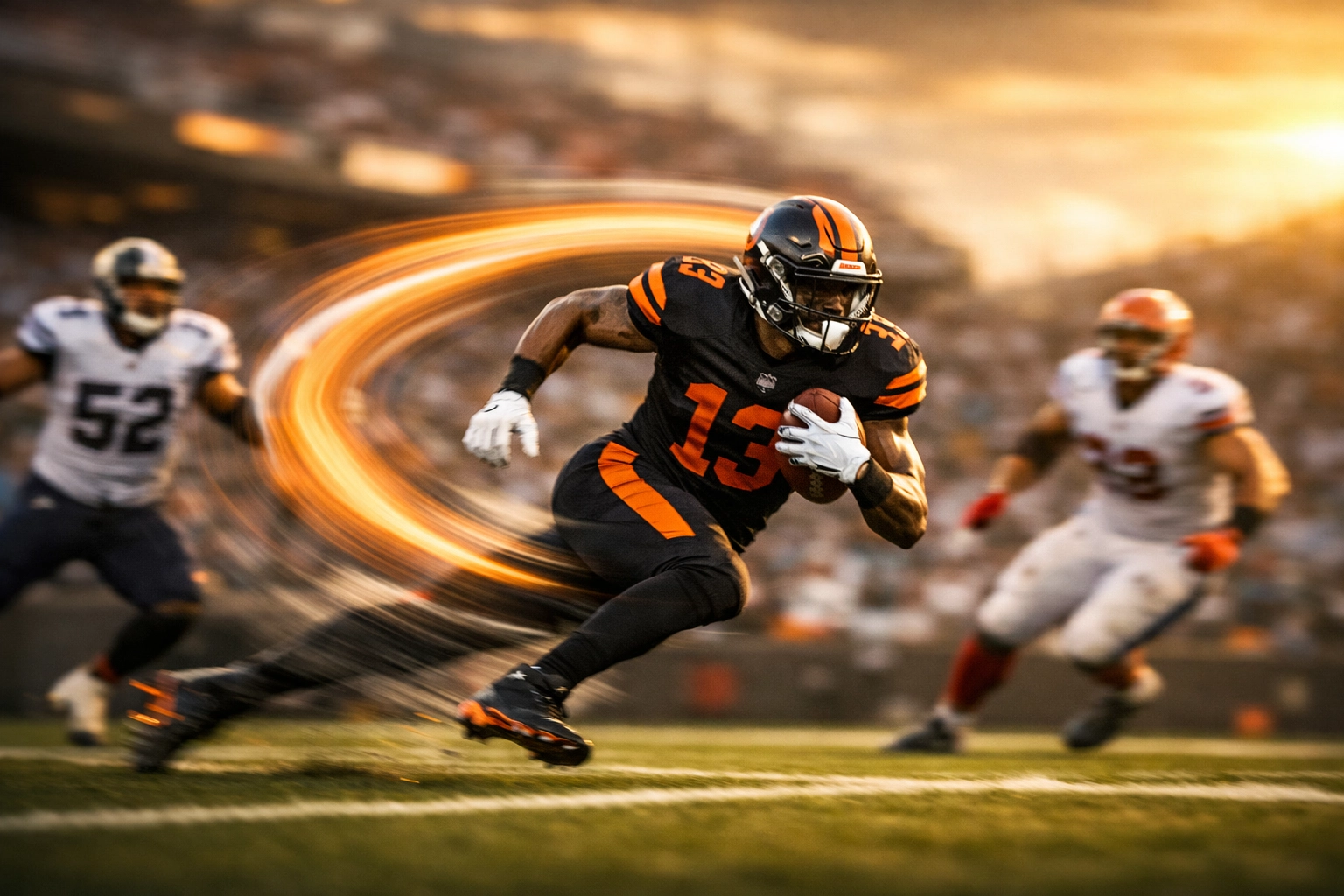
Secret #3: The Asteroid: Breaking Linear Tracking with Orbit Motion
Here's where things get really advanced. Most motions are linear: receivers move from one side of the formation to the other in a straight line. Defenses are trained to "pass off" these linear motions, sliding their coverage responsibilities to match.
The Asteroid concept destroys this logic with non-linear, circular movement that's nearly impossible to defend in modern Match-Quarters coverage.
Here's the sequence:
- The receiver starts in motion away from the formation's strength
- He settles momentarily into a slot position (defense thinks the motion is complete)
- As the ball is snapped, he enters "orbit motion": a circular path behind the backfield that keeps him moving throughout the entire snap
Why is this devastating? Because the receiver's momentum and relative position are constantly changing. The defense can't establish a static leverage point. If they try to pass him off from one defender to another, there's no clean handoff point: he's always in the "gray area" between responsibilities.
This is especially deadly against zone coverage. The underneath zone defender can't squat on his area because the receiver is circling behind him. The deep zone can't come down because the receiver might break vertical. The result is a coverage void that a good quarterback will exploit every time.
Youth and high school application: Even if your athletes aren't ready for full orbit motion, you can apply the principle: use non-linear paths (curves, loops, delays) to create tracking problems for young defenders who are used to reading straight-line movements.
Secret #4: The Bump: Creating Personnel Nightmares from the Backfield
Elite offenses don't just move receivers: they move skill players from the backfield to the perimeter to create specific mismatches.
The "Bump" concept involves starting a player (typically your most athletic running back or H-back) in the backfield, then having them "bump up and out" to align as a receiver just before the snap.
The technical instruction: "Start in backfield. Bump up and out. Across OL performance align."
Why this matters: Personnel matchups.
When your offense initially aligns with a running back in the backfield, the defense matches with a heavier personnel package: extra linebackers, smaller defensive backs on the sideline. But when that "running back" suddenly bumps out to the perimeter and runs a vertical route, you've created a speed mismatch.
Now you have a slower linebacker isolated in space against a dynamic athlete running a seam route. That's what coaches call a "layup": an easy completion that moves the chains.
At the youth level, this concept is gold because it exploits the reality that most teams only have one or two truly athletic linebackers. Force them to cover your best athlete in space, and watch the yardage accumulate.
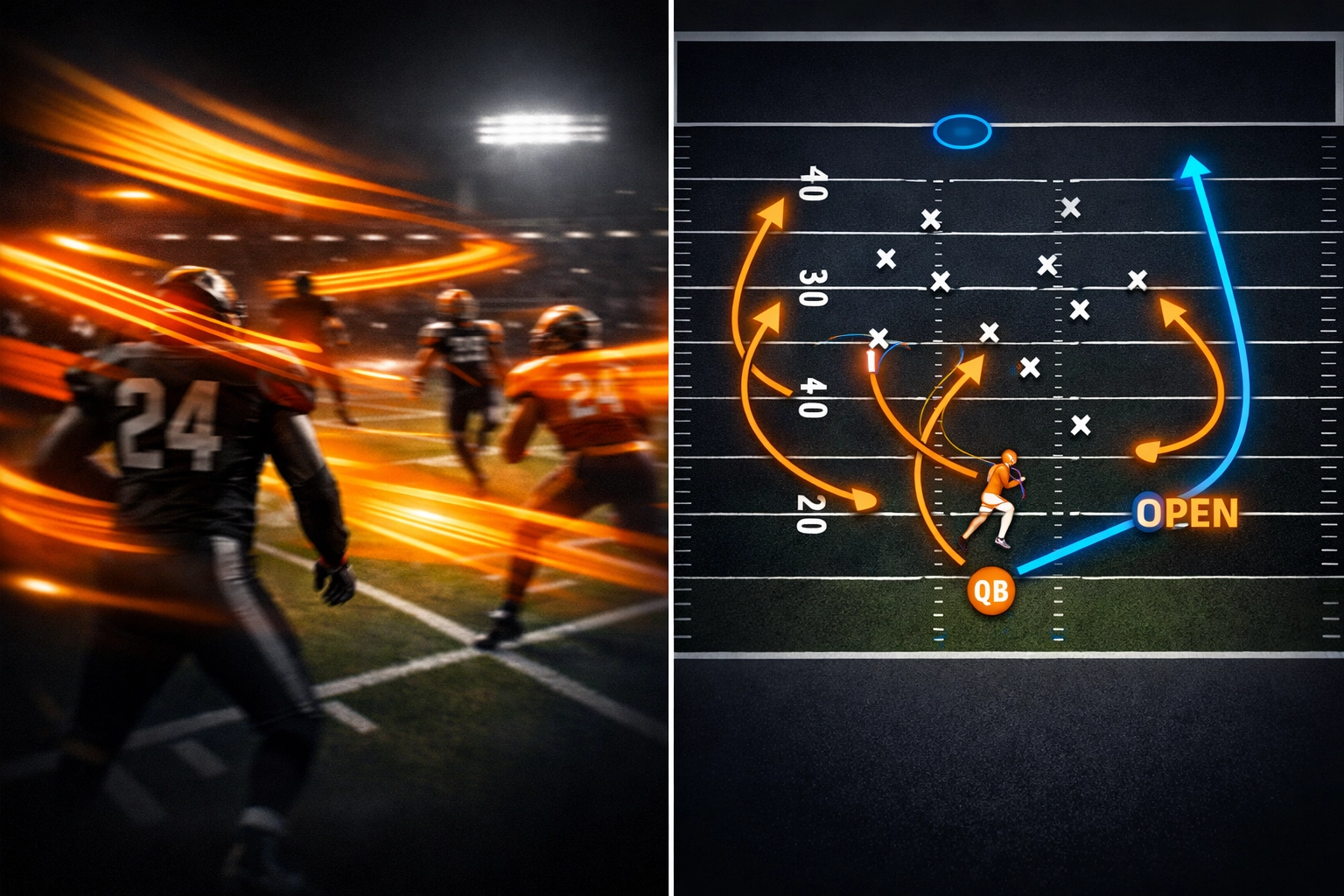
Secret #5: The Magic Shift: Weaponizing Tempo to Trap Defenses
The ultimate pre-snap weapon combines everything we've discussed with one additional element: tempo.
The Magic Shift is exactly what it sounds like: football wizardry that makes defenses disappear right before your eyes.
Here's the setup: Your offense lines up in Formation A. The defense reads it, makes their call, and sets their alignment. Then, on a pre-determined signal, your entire offense hurries to Formation B and immediately snaps the ball.
The technical term: "Static-to-chaos transition."
What happens to the defense? They're caught mid-adjustment. The defensive captain is trying to communicate a new call. Players are searching for their landmarks. The safety is sprinting to a new alignment. And the ball is already snapped.
This isn't just about confusing the defense: it's about preventing their ability to react. When you shift and immediately snap, you remove the defense's most valuable tool: communication time.
The coaching emphasis: The shift must be practiced to perfection. Every player must know their new alignment instantly. The snap must come immediately after the shift completes (within the legal one-second pause). Hesitate, and the defense gets organized. Execute cleanly, and you're playing 11-on-6 because half the defense is still figuring out where to line up.
Putting It All Together: The Pre-Snap Advantage
These five concepts: the Boomerang, X RUSH, Asteroid, Bump, and Magic Shift: aren't just college football theory. They're practical weapons that youth and high school teams can implement starting this week.
The common thread? All of them win the play before it starts.
In modern football, the snap is just the conclusion of a five-second psychological war. The team that masters pre-snap manipulation: creating simulation, overloading processing, breaking tracking patterns, manufacturing mismatches, and weaponizing tempo: is the team that dictates the game.
Start small. Pick one concept that fits your personnel. Install it correctly. Rep it until your players can execute it without thinking. Then watch as defenses who once had answers suddenly have none.
The chess match is won before the pieces ever move.
Ready to bring elite-level tactical training to your game? Our programs at myfootballcamps.com break down these advanced concepts in player-friendly formats. For personalized coaching and year-round development, visit coachschuman.com and boardwalkbeastsfb.com. The difference between good and great is in the details; and we teach every single one.
About Author
