
The Bluegrass Revolution: How Will Stein is Rebuilding Kentucky’s WR Room from Scratch
Before we dive into Kentucky's massive roster shakeup, let's talk about your own program. Whether you're a youth coach building a competitive roster or an athlete looking to elevate your game, the lessons from elite college programs apply at every level. Check out the training resources at myfootballcamps.com and visit boardwalkbeastsfb.com to see how we apply championship-level strategies to youth development.
The Earthquake in Lexington
The Winter 2026 transfer portal window just delivered a seismic shockwave through the SEC, and ground zero was Lexington, Kentucky. When Will Stein took over as head coach of the Wildcats: replacing the long-tenured Mark Stoops: he didn't just change the playbook. He torched the entire wide receiver room and rebuilt it from the foundation up.
This wasn't a tweak. This was a full-scale demolition and reconstruction project.
Stein, the former Oregon offensive coordinator known for his high-octane spread attack, made it clear from day one: if you don't fit the scheme, you don't fit the roster. The result? A mass exodus of familiar faces and an influx of size, speed, and untapped potential that could either launch Kentucky into offensive relevance or blow up spectacularly in year one.

The Catalyst: From Stoops Ball to Stein Speed
Mark Stoops built Kentucky into a respectable SEC program through defense-first football and methodical offense. It worked: bowl games became routine, and the Wildcats were no longer the conference punching bag. But "respectable" isn't "explosive," and in the modern SEC arms race, you either score or you get left behind.
Enter Will Stein. At Oregon, Stein orchestrated an offense that spread the ball across six receivers with at least 23 catches in the 2024 season. His philosophy isn't about force-feeding a WR1. It's about creating so many viable threats that defenses can't cheat to any single matchup. During his time at UTSA as passing game coordinator, his offense ranked No. 13 nationally in passing yards, averaging over 300 yards per game through the air.
That system requires specific tools: vertical speed, route savvy, and receivers who can win 1-on-1 battles downfield. Kentucky's existing receiver room? Built for something else entirely.
So Stein did what any tactical coach would do when inheriting the wrong personnel: he went shopping.
The Purge: Trading Continuity for Scheme Fit
The departures hit fast and hard. Kentucky lost seven wide receivers during the portal window, including some of their most productive players:
Hardley Gilmore IV was the biggest blow. The team's second-leading receiver with 28 catches, Gilmore had the tools to be a future WR1. Instead, he bolted for Louisville: Kentucky's in-state rival. That's not just a roster loss. That's a psychological gut punch.
Cam Miller, a rising rotation player, entered the portal. So did Preston Bowman (transferred to Ohio), Troy Stellato, and Quintin Simmons. Add in the natural losses from eligibility exhaustion: Kendrick Law and Ja'Mori Maclin: and you're looking at a receiver room that essentially lost an entire depth chart.
On paper, this looks catastrophic. In reality, it was calculated.
Stein wasn't trying to retain players who excelled in a pro-style, run-heavy offense. He needed athletes who could stretch the field vertically, win on fade routes, and execute the high-tempo spacing concepts that define his system. If that meant starting from scratch, so be it.

The New Arsenal: Size, Speed, and Upside
Stein didn't just clear the room: he restocked it with purpose. The incoming transfers represent a clear philosophical shift: bigger bodies, higher ceilings, and players with something to prove.
Xavier Daisy (UAB): At 6'3", Daisy brings the prototypical "X-receiver" size that Kentucky lacked. He's a red-zone nightmare and a 50-50 ball winner. UAB is going to miss him badly: he was their rising star with 18 catches and 177 yards in limited action. For Kentucky, he's the contested-catch specialist every offense needs.
Nic Anderson (Oklahoma): Anderson is the high-risk, high-reward gamble. A former four-star recruit, Anderson flashed elite potential as a freshman before inconsistency set in. Stein is betting that a scheme change and fresh start can unlock the talent that made Anderson a top recruit. If he hits, Kentucky just landed a future All-SEC player. If he doesn't, they've got a rotation piece.
Shane Carr (Louisville): The hometown hero returns. Carr is a Lexington native who played at Louisville before transferring back to Kentucky. He's not the flashiest name, but local ties matter, and Carr adds depth with built-in buy-in to the program.
Ja'Kayden Ferguson (Arkansas) and Davis McCray (Texas) round out the haul, adding competition and SEC-tested bodies to the rotation.
This isn't a roster built for immediate chemistry. It's a roster built for maximum explosiveness if the pieces click.
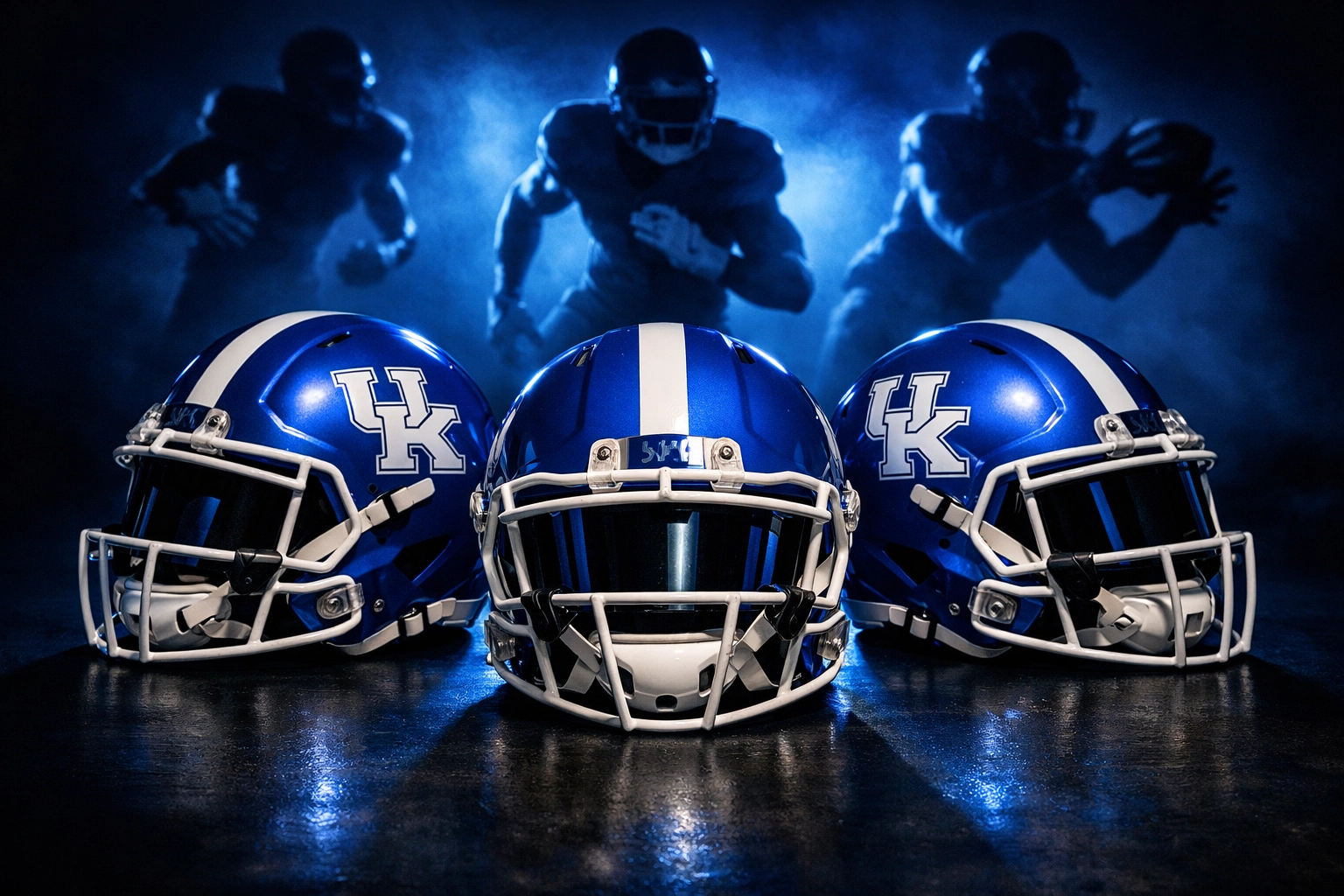
The Strategic Gamble: High Ceiling, Low Floor
Here's the reality that Kentucky fans need to accept: this is a high-variance strategy.
On the upside, if Daisy and Anderson hit their potential, Kentucky could field one of the most explosive receiving corps in the SEC. Stein's system thrives when multiple receivers can win vertically, and the size/speed combination of this new group is undeniable. Pair them with a competent quarterback, and the Wildcats could go from "run-first plodders" to "45-points-a-game contenders" overnight.
On the downside, the lack of returning chemistry and proven production creates early-season vulnerability. Timing routes take reps. Trust between quarterback and receiver takes games. If the portal additions don't gel quickly, Kentucky could stumble out of the gate while rival programs with continuity: like Tennessee, Georgia, and Florida: feast on their inexperience.
But here's the thing about high-variance strategies: they're how mid-tier programs break through. Playing it safe keeps you in the middle of the pack. Swinging for the fences: like Stein is doing: gives you a chance to win the whole thing.
The Rival Beneficiaries: Louisville's Net Win
While Kentucky rolled the dice, Louisville cashed in. Landing Hardley Gilmore IV from their in-state rival is a PR coup and a legitimate roster upgrade. Gilmore is SEC-proven, immediately contributes, and knows exactly how to beat Kentucky's defense (he practiced against it for years).
Losing Shane Carr back to Kentucky stings a bit, but trading a developmental piece for a proven contributor from your rival's roster is an absolute win for the Cardinals.
UAB, meanwhile, is mourning the loss of Xavier Daisy. He was supposed to be their next big thing, and now he's suiting up in Kentucky blue.

What This Means for You: Lessons from the Transfer Portal Era
If you're a youth coach, parent, or athlete watching this unfold, here's the takeaway: roster construction is as important as X's and O's. Stein didn't just change the scheme: he aligned his talent to execute that scheme at the highest level.
This is the same principle we teach at Boardwalk Beasts. Putting the right players in the right positions, with the right coaching, creates competitive advantages. Whether it's a transfer portal overhaul or a youth football roster, the philosophy is identical: scheme fit beats raw talent every time.
Want to learn how to build competitive rosters and develop players in high-leverage systems? Visit myfootballcamps.com for elite training opportunities and head to coachschuman.com for tactical coaching resources that apply from youth ball to college prep.
The Verdict: Revolution or Recklessness?
Will Stein's overhaul of Kentucky's WR room is either genius or madness: and we won't know which until September.
What we do know is this: Stein didn't come to Lexington to play it safe. He came to build an offensive juggernaut capable of competing with the SEC's elite. The price of that ambition was continuity, chemistry, and the comfort of known commodities.
The payoff could be a top-10 offense and a breakthrough season. Or it could be a chaotic first year that takes time to stabilize.
Either way, the Bluegrass Revolution is underway. And the rest of the SEC better be paying attention.
Ready to elevate your own program? Whether you're building a youth football team or developing the next generation of athletes, the lessons from elite programs like Kentucky apply at every level. Explore training camps, coaching resources, and player development programs at myfootballcamps.com, coachschuman.com, and boardwalkbeastsfb.com. Let's build champions together.
About Author
