Stop Wasting Time on Basic Drills: Try These 7 Elite Speed Training Hacks
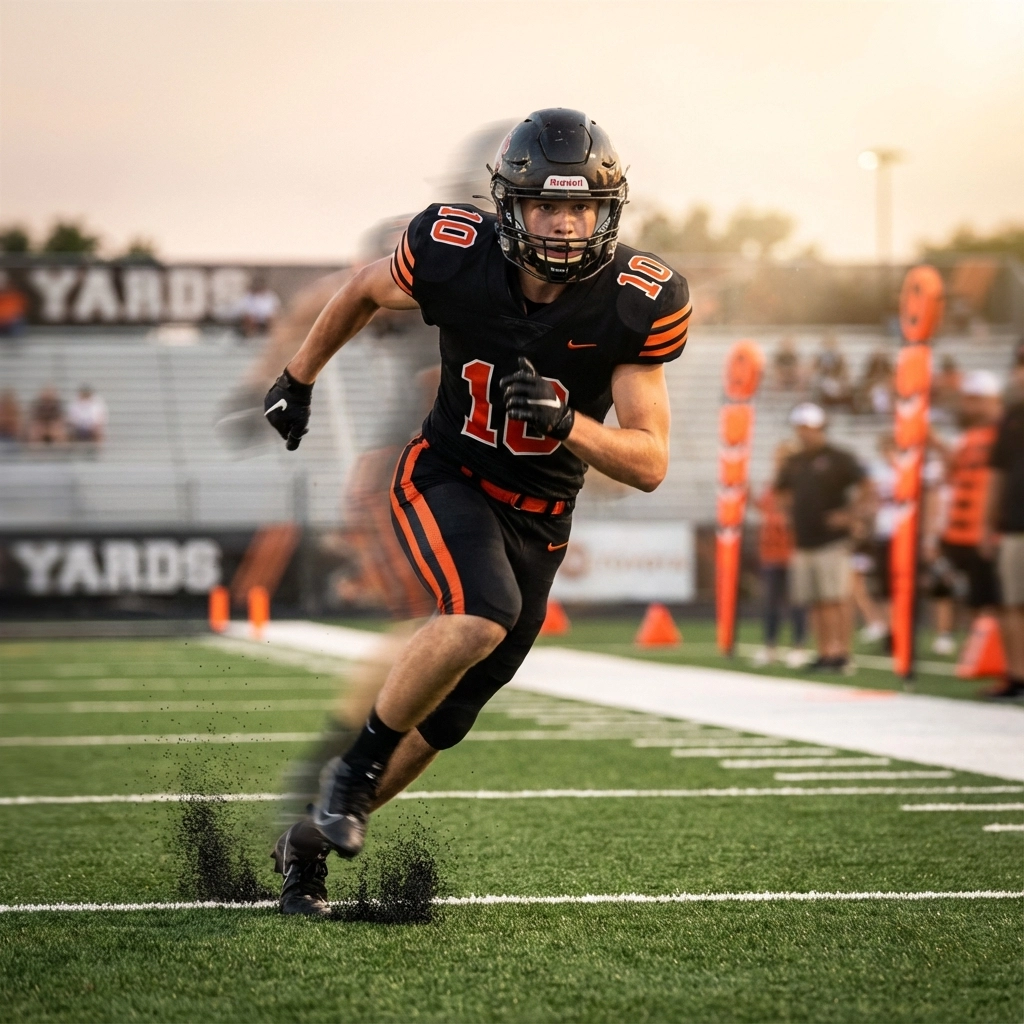
Every Friday night, you watch those explosive players who seem to have another gear. They blow past defenders, close gaps in coverage, and make plays that leave everyone wondering "how did they get so fast?" The truth is, they're not training with the same tired ladder drills and basic sprints that most youth programs rely on.
Ready to unlock real speed gains? Join the Boardwalk Beasts Football Club and train with championship-level coaching that implements these elite methods. Check out our programs and see why our athletes consistently outperform the competition.
Here are the seven elite speed training hacks that separate championship 7v7 teams from everyone else:
1. Master the Flying Sprint Method
Forget running 40-yard sprints from a dead stop every single time. Elite teams use "flying sprints" where athletes build up speed over 20-30 yards, then hit a marked zone at maximum velocity for 10-20 yards.
Why it works: This isolates pure top-end speed development without the fatigue of constant acceleration phases. Your nervous system learns to handle higher speeds, and you develop better mechanics at maximum velocity.
Practical tip: Set up cones at 20, 30, and 50 yards. Accelerate gradually to the 20-yard mark, then sprint all-out through the 30-50 yard zone. Rest 3-4 minutes between reps to maintain quality.
2. Implement Contrast Training for Explosive Power
Championship teams pair heavy resistance work immediately followed by unloaded speed work in the same session. Think sled sprints followed by free sprints, or weighted vest acceleration followed by bodyweight acceleration.
Why it works: The heavy load "potentiates" your nervous system, making you feel lighter and move faster in the unloaded movement. This neurological trick can boost performance by 3-8% immediately.
Practical tip: Perform 3 x 30-yard sled sprints (moderate resistance), rest 90 seconds, then immediately do 3 x 30-yard free sprints. The contrast will make you feel like you're flying.
3. Train Reactive Speed, Not Just Linear Speed
Most programs drill straight-line speed, but football happens in reaction to what you see. Elite athletes train with unpredictable stimuli that force split-second decision making.
Why it works: Football speed isn't just about moving fast: it's about recognizing, deciding, and reacting faster than your opponent. This trains the mental component of speed that basic drills ignore.
Practical tip: Have a coach randomly drop colored tennis balls during your sprint. Sprint to catch only the red ones, ignore the blue ones. This trains reactive acceleration and decision-making under pressure.
4. Focus on Rate of Force Development (RFD)
Instead of just jumping high, train how quickly you can generate maximum force. This means explosive plyometrics with minimal ground contact time: think pogo jumps, depth drops, and reactive bounds.
Why it works: Football plays last 4-6 seconds. You don't need marathon endurance; you need explosive power that activates instantly. RFD training develops this rapid force production.
Practical tip: Perform 5 x 5 ankle hops focusing on minimal ground contact time and maximum height. If you can't maintain crisp, reactive bounces, you're doing too many reps.

5. Use Overspeed Training Methods
Train your body to move faster than it naturally can through downhill sprints, assisted sprints with bands, or treadmill overspeed work. This forces your nervous system to adapt to higher stride frequencies.
Why it works: Your body learns to coordinate at speeds beyond its normal capacity. When you return to normal conditions, those faster movement patterns stick around.
Practical tip: Find a gentle downhill slope (2-4% grade) and perform 6 x 30-yard sprints focusing on leg turnover, not stride length. The slight assistance helps you experience faster speeds safely.
6. Master Deceleration Before Acceleration
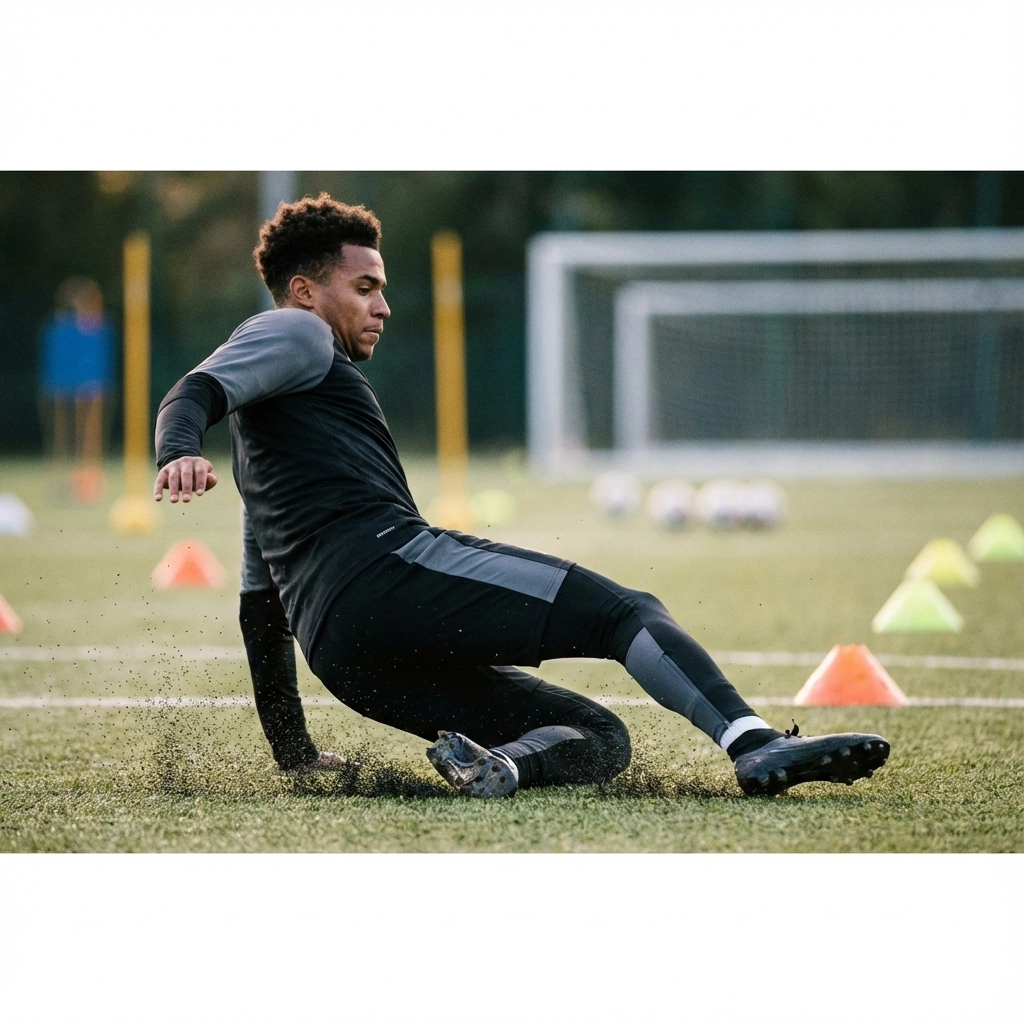
Most youth athletes can accelerate but can't efficiently slow down and change direction. Elite training emphasizes controlled deceleration mechanics: landing mechanics, eccentric strength, and body positioning.
Why it works: In football, you're constantly starting, stopping, and changing direction. Poor deceleration mechanics limit how aggressively you can approach top speed and how quickly you can change direction.
Practical tip: Practice "put on the brakes" drills. Sprint to 80% speed for 20 yards, then decelerate to a complete stop in 5 yards using proper shin angle and body positioning. Focus on control, not just speed.
7. Periodize Speed Work Like Strength Training
Elite programs don't do the same speed drills year-round. They periodize speed training with phases focusing on different energy systems, movement patterns, and intensities throughout the season.
Why it works: Your nervous system adapts to training stimuli just like your muscles do. Varying the stimulus prevents plateaus and ensures continued improvement.
Practical tip: Spend 3-4 weeks emphasizing acceleration (0-20 yards), then 3-4 weeks on maximum velocity (flying sprints), then 3-4 weeks on speed endurance (longer intervals with incomplete rest).
Why These Hacks Beat Basic Drills
Traditional ladder drills, tire runs, and endless conditioning have their place, but they don't develop the specific adaptations needed for football speed. Here's what separates elite training from busy work:
Neural adaptation over muscle fatigue: Elite training targets your nervous system's ability to recruit muscle fibers rapidly and coordinate complex movements at high speeds.
Quality over quantity: Championship teams focus on perfect mechanics at maximum intensity rather than grinding through high-volume, low-quality repetitions.
Specificity matters: Football speed happens in cleats on grass/turf, in pads, with reactive elements. Elite training mimics these conditions rather than training in a vacuum.
The Boardwalk Beasts Advantage
At Boardwalk Beasts Football Club, these aren't just concepts: they're the foundation of our speed development program. Our professional coaching staff implements periodized speed training that progresses athletes through systematic phases of development.
Our structured approach includes:
- Position-specific speed training for different roles on the field
- Video analysis to perfect mechanics and identify individual limiters
- Small group training that allows for personalized attention and immediate feedback
- Integration with football-specific skills so speed transfers directly to game performance
We've seen middle school athletes drop 0.3-0.5 seconds off their 40-yard times in a single season using these methods. High school players consistently test faster at combines and showcases after training with our systematic approach.
The difference is in the details. While other programs run the same basic drills every practice, we're constantly evolving our methods based on the latest research in speed development and neural adaptation.
Your Next Step
Speed isn't built overnight, but it's also not built through outdated training methods that ignore how your nervous system actually adapts. The athletes who dominate on Friday nights understand that elite speed requires elite training methods.
Ready to experience the difference? The Boardwalk Beasts Football Club offers comprehensive training programs that implement these elite speed development methods in a structured, progressive system. Our athletes consistently outperform expectations because we train smarter, not just harder.
Don't waste another season stuck in neutral with basic drills that don't transfer to game speed. Join a program that understands how championship-level speed is really developed.
Contact us today to learn more about our speed development programs and see why Boardwalk Beasts athletes consistently achieve breakthrough performances when it matters most.
About Author
