Girls Flag Football Explodes: 5 Steps How to Get Recruited and Dominate (Easy Guide for Female Athletes)
The numbers don't lie: girls flag football is absolutely exploding across the country. What started as a fun alternative to tackle football has evolved into a legitimate pathway to college scholarships and athletic stardom. With 15 NAIA institutions now offering women's flag football scholarships and six NCAA Division II schools jumping in for the 2025-26 season, the opportunities for female athletes have never been better.
But here's the reality check: just because the sport is growing doesn't mean recruitment is automatic. The competition is fierce, and coaches are getting pickier about who makes their roster. If you're serious about taking your flag football talents to the next level, you need a game plan that's as aggressive as your route-running.
Ready to dominate the recruitment game? Let's break down the five essential steps that separate future college athletes from weekend warriors.
Step 1: Get Maximum Exposure Through Strategic Targeting
Most girls make the mistake of casting too wide a net or not casting one at all. Smart recruits start with laser-focused research. You're not just looking for any college: you're hunting for programs that fit your academic goals, geographic preferences, and competitive level.
Start by creating a target list of schools with women's flag football programs. The current landscape includes powerhouses in the NAIA like Ottawa University and Keiser University, plus the emerging NCAA Division II programs through Conference Carolinas. Don't sleep on junior college programs either: they're often stepping stones to four-year scholarships.
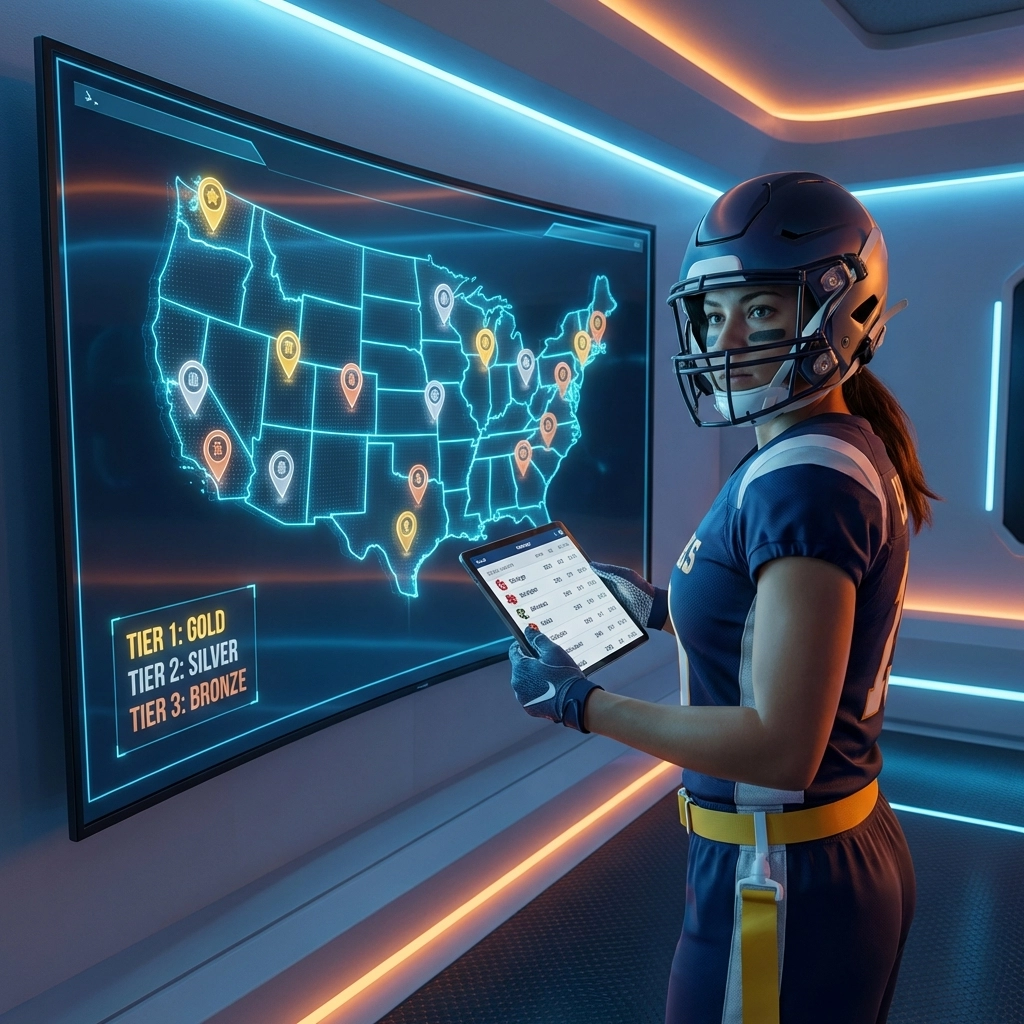
Here's the key: create three tiers of schools. Tier 1 is your dream schools where you'd need to be at your absolute best. Tier 2 schools are realistic targets where your current skill level matches their needs. Tier 3 schools are your safety net: programs where you'd likely earn playing time immediately.
For each school, research their coaching staff, recent recruits, and playing style. Does their offense favor speed receivers or possession catches? Are they known for aggressive defensive schemes? This intel becomes crucial when you're crafting your pitch to coaches.
Step 2: Build a Killer Highlight Reel That Gets Noticed
Your highlight video is your golden ticket: period. Since only four states currently have sanctioned high school flag football programs, most coaches will never see you play in person before offering a scholarship. Your video needs to do the talking.
Here's what separates amateur reels from recruit magnets: your video should tell a story about your football IQ, not just your speed. Start with your best play, but follow it with 8-10 clips that showcase different skills. Quarterbacks need to show pocket presence, accuracy, and decision-making under pressure. Receivers need routes, hands, and after-catch ability. Defensive players need coverage skills, flag-pulling technique, and field vision.
Keep your reel under three minutes: coaches have short attention spans. Include game footage over practice clips whenever possible, and make sure the camera quality is crisp enough to see details. No shaky phone videos that look like they were filmed during an earthquake.
Pro tip: Include 2-3 plays where you made mistakes but showed great recovery. Coaches want to see how you handle adversity, not just your highlight moments.
Step 3: Dominate Showcases and Elite Camps
While video gets you noticed, showcases and camps seal the deal. The NFL FLAG College Showcase has become the premier recruiting event for female flag football players, giving you direct access to NAIA and NJCAA coaches who are actively recruiting.
But don't put all your eggs in one showcase basket. Regional camps and clinics, especially those run by college coaches, offer more intimate settings where you can build relationships. These smaller events often lead to more meaningful connections than massive showcases where you're competing with hundreds of other athletes.

At Boardwalk Beasts training programs, we've seen how proper preparation makes the difference between athletes who get invited back and those who get forgotten. Before any showcase, spend weeks working on your fundamentals. Coaches notice players who execute basics flawlessly under pressure.
During camps, be coachable above all else. The athlete who takes feedback well and improves throughout the day often outshines the naturally gifted player who thinks they know everything. Ask questions, take notes, and stay engaged even when you're not actively participating in drills.
Step 4: Master the Art of Coach Communication
This is where most recruits completely fumble the ball. Sending a generic email to 50 coaches with "I want to play for you" isn't communication: it's spam. Effective coach outreach requires strategy, personalization, and follow-through.
Your initial contact should include three things: a brief personal introduction, your highlight video, and specific reasons why you're interested in their program. Reference something specific about their team: maybe they just won a conference championship or their offensive coordinator runs schemes similar to what you've excelled in.
Follow up every 2-3 weeks with updates on your development. Share new statistics, mention camps you're attending, or update them on academic achievements. The key is providing value, not just asking for attention.
When coaches respond, reply promptly and professionally. If they invite you to campus or request a phone call, treat it like a job interview. Research their program thoroughly, prepare thoughtful questions, and dress the part. First impressions stick, especially in a sport where personal relationships matter enormously.
Step 5: Understand the New Scholarship Landscape
The scholarship game in women's flag football is evolving rapidly, and smart recruits stay ahead of the curve. NAIA programs can offer full rides, but most schools split scholarships among multiple players. Understanding this reality helps you negotiate better.
Academic scholarships often complement athletic aid, especially at private institutions. Maintaining strong grades doesn't just keep you eligible: it makes you more valuable to coaches working with limited scholarship budgets. A 3.5 GPA with solid test scores can be worth thousands in combined aid.

Don't overlook emerging opportunities. As NCAA Division II programs launch, they're hungry for talent and may offer more generous packages to early recruits. Similarly, junior college programs often provide excellent value: two years of development plus scholarship money, followed by transfer opportunities to four-year schools.
The NIL (Name, Image, Likeness) revolution is also creating new revenue streams for college athletes. Women's flag football players with strong social media followings and engaging personalities are starting to land endorsement deals. Building your personal brand now can pay dividends later.
Ready to Dominate Your Recruitment Journey?
The path to college flag football success isn't just about raw talent: it's about strategic preparation, relentless effort, and getting the right coaching along the way. The athletes who get recruited aren't necessarily the fastest or strongest; they're the ones who understand the process and execute their plan flawlessly.
At Boardwalk Beasts Football Club, we've helped dozens of athletes earn college opportunities through our comprehensive recruiting programs and specialized training camps. Our coaches understand what college programs are looking for because many of them played or coached at that level.
Don't wait until senior year to start your recruitment journey. The girls who get the best opportunities are the ones who start building relationships and developing skills early. Whether you need help with highlight videos, showcase preparation, or coach communication strategies, our team has the expertise to elevate your recruitment game.
Visit myfootballcamps.com to explore our training programs, or check out boardwalkbeastsfb.com to learn more about joining our competitive flag football teams. The college scholarship you've been dreaming about is out there: but only if you're willing to put in the work to claim it.
The flag football revolution is here. Are you ready to be part of it?
About Author
